

ArmInfo.The Eurasian Development Bank (EDB) has published an updated macroeconomic forecast for the Bank's operating region for 2021 and the medium term. In March, EDB analysts projected a strong recovery in the Bank's member states, but the reality of the first half of the year exceeded expectations.
As a result, the region's largest economies Russia and Kazakhstan already reached the pre-pandemic levels by the end of Q2 2021, according to EDB estimates.
The rapid recovery of the global economy, fuelled by credit and budgetary injections in developed countries, is accelerating inflation globally. Inflation in the EDB member states is moving in line with the global trend, with the regional average rising to 6.6% YoY in May 2021 from 5.6% in December 2020. Many inflationary factors will be neutralised with time. EDB analysts forecast that inflation in the Bank's member states will slow to an average of 5.6% by the end of 2021 and return to target levels during 2022.
The review notes that the world's largest economies this year will register their fastest growth in a decade but it will be associated with recovery. China's GDP may increase by 8.5%, that of the Eurozone by 4.3%, and the U.S. economy by 6.5%. As early as 3Q 2021, the U.S. economy may be overheating due to massive budget and cash injections. However, the baseline scenario assumes that the Fed's policy remains soft this year and that a cautious rate hike will start from late 2022-early 2023. Oil prices in 2021-2023 are projected to be within a comfortable range for the Bank's operating region of US $60-65 per barrel.
The 2021 projection for aggregate GDP growth of EDB member states has been raised by 0.7 p.p. to 4% due to strong support from the global economy. The revision is attributable to an improved GDP growth estimate for Russia this year, from 3.3% to 4.1%. The pace of Russia's economic recovery has exceeded expectations. Oil prices are higher than projected before and higher budget revenues are likely to result in additional support for business activity on the spending side.
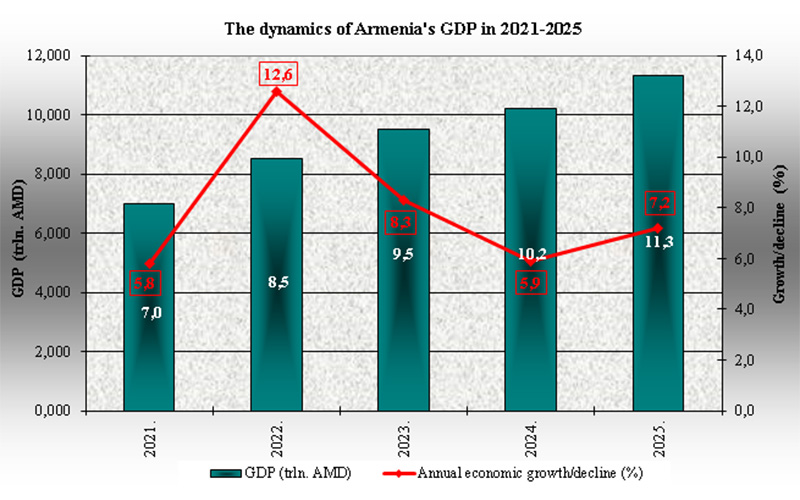
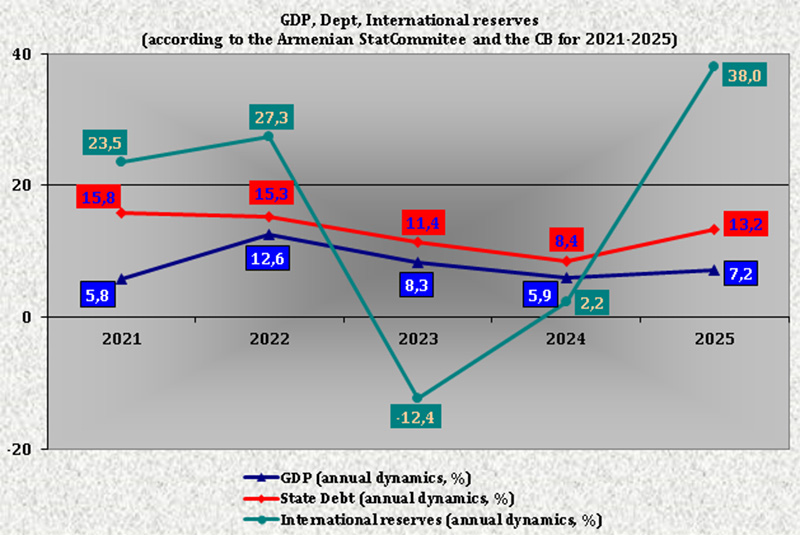
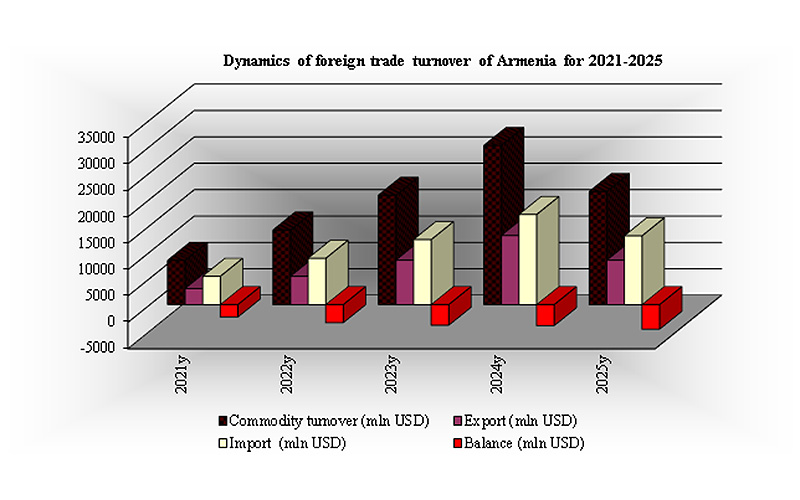
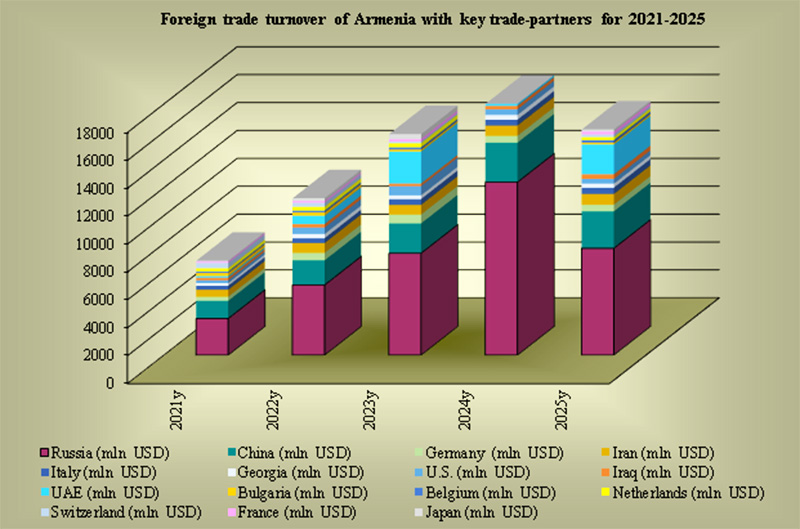
The EDB's GDP growth forecasts for Armenia and Belarus have also been raised to 4.2% and 1.3% in 2021, respectively. The stronger economic recovery of Russia, a key trading partner of Armenia and Belarus, has boosted the exports of these countries in the first half of the year. However, Belarus is projected to see a slowdown in economic growth in the second half of the year due to the introduction of restrictive measures by the U.S., EU, and UK.
The EDB maintains its projection for Kazakhstan's economy to grow by 4% in 2021. High oil prices will continue to support economic activity in Kazakhstan. However, the more protracted effect of restrictive measures largely offsets the positive impact of the external environment.
The EDB's growth forecasts for Kyrgyzstan and Tajikistan for 2021 are maintained at 3.9% and 6.1%, respectively. The faster-than-projected recovery of the Russian economy may not have a significant effect on the growth of the Kyrgyz and Tajik economies this year, as restrictions on cross-border labour migration are set to linger.
EDB analysts note that the inflation path in the Bank's member countries is broadly in line with the previous projection. The price rises in the region are now largely imported. They are due to higher commodity prices and the weakening of national currencies during the previous year. With continued global constraints and rapidly increasing demand, delivery times are often longer and the choice of suppliers and components is shrinking. Demand-side pressures on prices are becoming increasingly persistent in most states in the region.
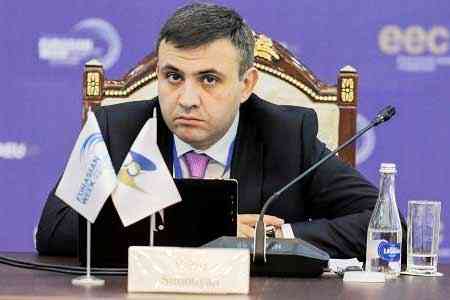
"The rapid recovery of the global economy, fuelled by credit and budgetary injections in developed countries, is driving asset prices up massively," said Evgeny Vinokurov, EDB and EFSD Chief Economist. "Temporary factors, such as pandemic-induced disruptions in production chains, the shrinking choice of suppliers and components, and the reduced supply of certain crops, also contribute to this situation. As a result, we are seeing a global spike in inflation. Almost forgotten in the 2010s, rising inflation rates have not only returned to the agenda of central banks globally, but have also become a difficult challenge for monetary policy. I believe that the key to assessing the risks of high inflation is the relationship between the fundamental and temporal factors that led to its acceleration. So far, we believe that many of the inflationary factors are temporary and will be neutralised as the pandemic 'wanes' and the active phase of global economic recovery comes to an end. But we also see the possibility of persistent increases in the average inflation rate in the 2020s. It is realistic to assume that inflation in developed countries will be steadily higher than in the 2010s - not the 0-2% that the market was used to in the 2010s, but perhaps 2-4%. This is what the world's norm was before the global financial crisis. Such persistent inflation rates do not constitute a structural problem for the global economy. But they will require an adjustment of the financial sector and the real sector."
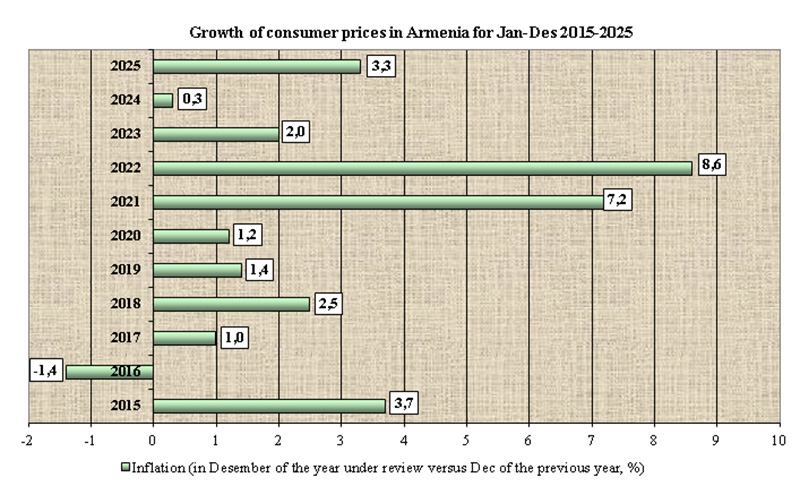
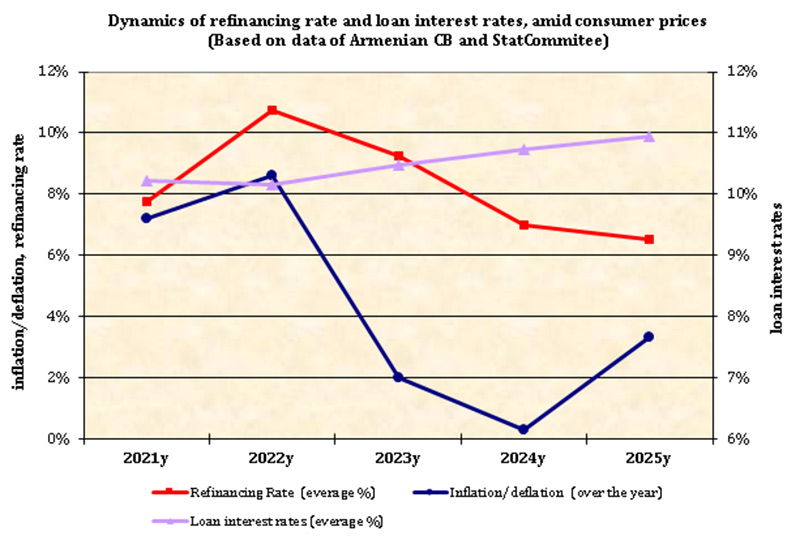
EDB analysts forecast the average inflation in the Bank's member states to slow from 6.6% YoY in May to 5.6% by the end of 2021 due to an easing of demand-side inflationary pressures and the recovery of production chains. In Armenia, the EDB expects inflation of 5.4% at the end of the year; in Belarus, 8.7%; in Kazakhstan, 6.7%; in Kyrgyzstan, 7.7%; in Russia, 5%; and in Tajikistan, 7.4%.