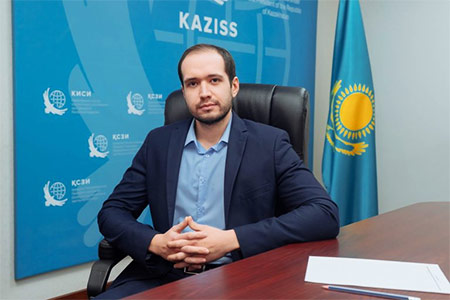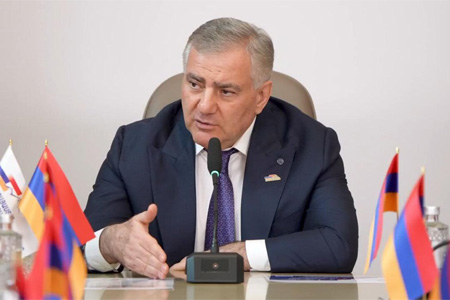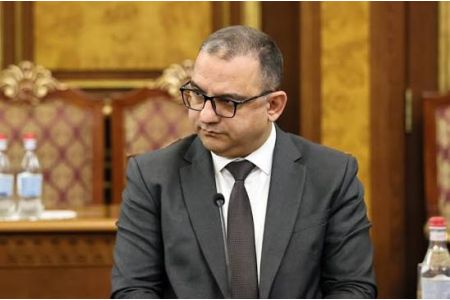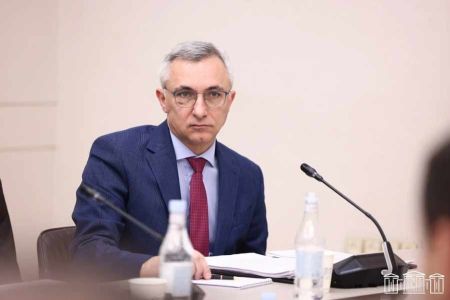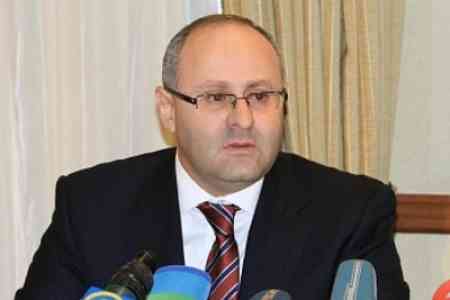
ArmInfo.Armenia should exert efforts to struggle for investors now, the well-known economist and banker, member of the Boards of a number of foreign banks Ashot Osipyan said an in interview with ArmInfo.
Referring to his professional activities in Russia and Central Asia, he said that both before and during the COVID-19 pandemic investors, amid the global financial instability, followed the "animal instinct" and repatriated their capital. But the situation is somewhat different now. People are not afraid of working amid COVID-19. Besides, the financial and banking sector of Armenia, as well as of other countries, has successfully coped with the COVID-19 crisis. The expert is sure that investors themselves are now looking for investment opportunities. "In the post-Soviet area, Russia is the largest entity, but sanctions against it are still in force. So investors have focused on other regions, the Caucasus, for instance, where Georgia is the most attractive, and on Central Asia, where Uzbekistan is of greatest interest now," the expert said. Since investors themselves are in search of interesting projects now, Armenia should exert efforts to struggle for investors. Osipya considers it a historically right period in view of numerous proposals and a high demand in the investment market. "Armenia needs to find its niche amid this demand," he says.
However, Mr Osipyan's opinion of the country's investment environment is not that reassuring. Attraction of investments requires considering three key stages of investment cycle: market entry, investment process and market exit.
Elaborating on the first stage, Mr Osipyan referred to John Maynard Keynes, who claimed that investors are guided by "spontaneous optimism." "That is, we must ensure this optimism by attracting investments in our country," he says. The expert notes Armenia lacks this platform for market entry. Different countries opt for different platforms, including stock exchanges, various meetings with investors, relevant government agencies. Osipyan takes Georgia's experience as a fine example. According to him, Georgia makes frequent use of the London Stock Exchange (LSE) as a platform, with regular road shows to present its investment projects. The ex-banker also complains about the lack of channels for investments and of culture that would give cause for investors' optimism. "Powerful specialized bodies inside the country are supposed to create and develop this culture. Regrettably, these lacking, we cannot make use of foreign investment companies' services. And the most important factor is that we have no interesting projects we could attract foreign investments for. As to the available projects, these are not of interest due to their low profitability, small domestic market and other factors," Osipyan said.
The second stage is investment process itself. In this context the expert notes that investments require a transparent and strong judicial system that would also be clear to investors. However, he said, Armenia lack such a system. "Arbitration courts perform this function in many countries, but they are only in the making in Armenia," Osipyan adds. One more requirement for investment attractiveness is political and economic stability, as well as predictability. In this context, he referred to the circumstances surrounding the Amulsar gold mine project, which has never been implemented and has "been in the air" for three years. "Certain changes - political or legislative ones - could kill investors' desire to invest in Armenia," the expert says. He highlights free competition in the country, which must be ensured by the government. "Regrettably, we do not yet see it working efficiently. And I cannot speak highly of the government body regulating economic competition in Armenia," Osipyan said.
He points out the lack of culture or of corporate management principles in Armenia's business environment. Specifically, owner is not yet separated from management in Armenia - especially in the case of real economy. The "one decision-maker" practice puts investors off.
The final stage of the investment process is, according to Osipyan, is a faulty procedure for investors' market exit. Specifically, he points out need for channels for free exit of investments from the country.
In this context he notes that this function is normally performed by the stock exchange, which is supposed to be connected with other national and international exchanges. However, stock market has never been formed in Armenia, and the platform for equity corporate securities is not, in fact, operating. Another well-known global model for working with investors is Build Operate Transfer - investors are invited to implement specific effective projects, such as plant construction for creation of new products markets, including export-oriented. Investors bring technologies, sales markets and, what is important trains personnel. If the investor plans to exit the country, the government assists by buying out the company to be able to put it up for sale in the future by means of investment companies.
"If our investment climate is not too attractive and we lack political stability, the government could at least assist the process by means of infrastructure," Osipyan said. It is noteworthy that direct foreign investments in Armenia's economy have been on the decline over the last 6-7 years, with a downward trend towards the historical minimum of 1.7% of GDP.