


ArmInfo.The Russian ruble began to rapidly depreciate against the US dollar at the end of February amid the Russian-Ukrainian conflict and Western sanctions. Its course rose to 120 rubles.
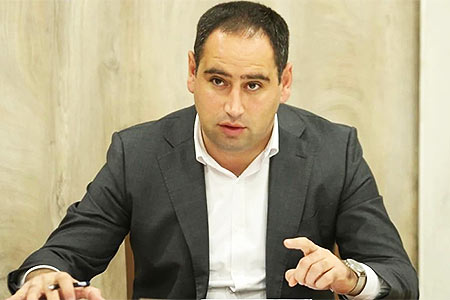
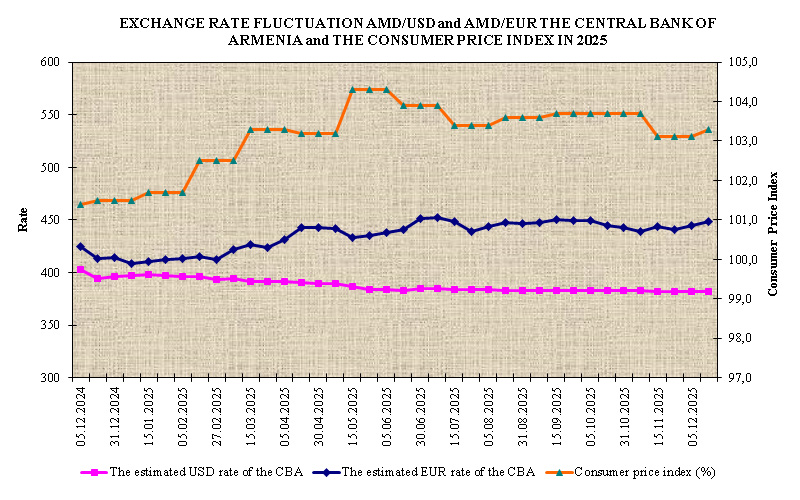
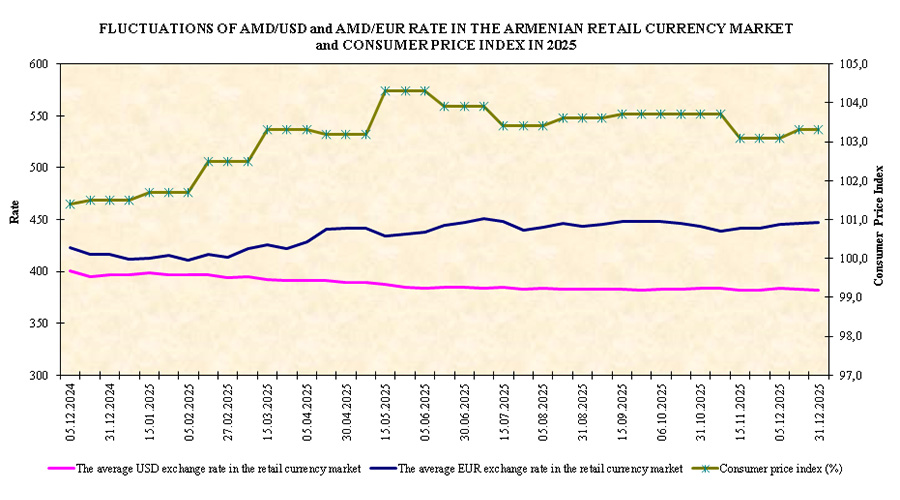
After the government and the Central Bank of the Russian Federation took a number of measures, including raising the discount rate of interest, the national currency began to revalue and by May 25 its rate fell back to the level of 55 rubles per $1. In the first days of the conflict, the Russian ruble also depreciated sharply in Armenia, but already in April its exchange rate against the Armenian dram exceeded the pre-crisis figure. As for the exchange rate of the US dollar against the Armenian dram, it began to grow sharply and by March 11 reached 518.28 drams. After that, it began to decrease intensively, and so far it keeps around 410 drams. Former head of the State Revenue Committee of Armenia, candidate of economic sciences David Ananyan told ArmInfo correspondent how the situation will develop against the backdrop of talks about the depreciation of the Russian currency and the expected next sharp increase in the refinancing rate of the US Federal Reserve. According to Ananyan, as of today it is very difficult to forecast how long the Russian ruble will retain its superiority over the US currency, since, at this stage, the prospects for the Russian economy entirely depend not only on the state of the conflict in Ukraine and its duration, but also on the geopolitical situation that will develop after the end of conflict. <If we assume that the conflict will end in a few months, we should try to forecast whether the West is ready to abandon sanctions against the Russian Federation, whether they will be lifted immediately or whether this will be done gradually. Making such a forecast is like a solving an equation with several unknowns, so we have to rely on the forecasts of high-ranking Russian officials and eminent experts>, Ananyan noted. In particular, the head of the Russian Sberbank Herman Gref forecasts that the ruble will continue to revalue in July, but by the end of 2022 it will go down and return to the range of 70-75 rubles per dollar.
At the same time, as the economist emphasizes, it is obvious that the depreciation of the Russian currency will indirectly affect the exchange rate of the Armenian dram and negatively affect the economy of Armenia.
<The devaluation of the ruble will lead to a decrease in the purchasing power of the population and a reduction in gross demand in Russia. Armenian exporters will have to raise prices for goods supplied to the Russian market, and then Armenian exports, mainly agricultural ones, will weaken their competitiveness>, the expert notes.
As for the dollar / dram pair, according to the former head of the State Revenue Committee, despite the unprecedented increase in the refinancing rate (the Fed rate is now at the level of 1.5-1.75%, it is expected that after the next increase it will reach the level of 3-3, 5%, ed. note.), the exchange rate of the American dollar in Armenia will remain at the current level for some time. There are objective reasons for this today, Ananyan believes.
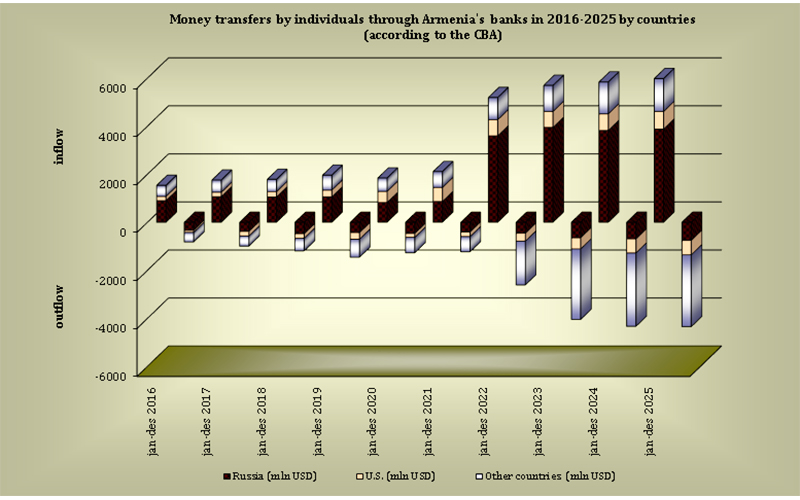
Thus, after the Russian-Ukrainian aggravation, a large influx of capital into Armenia was recorded. Russia, reacting to Western sanctions, issued retaliatory sanctions. In particular, it began to pursue a policy of ousting dollar deposits from Russian financial institutions. As a result, not only Russians emigrated to Armenia, but also their dollar assets.
In addition, after relocation to Armenia, IT companies continued their work with their foreign counterparties in dollars, as well as pay their employees salaries in dollars.
And the third main reason is that, again, due to Western sanctions, Russia was forced to switch to trading in rubles, which naturally affected trade with Armenia. This led to a sharp reduction in demand for the US currency. In particular, the largest consumer of the American dollar, Gazprom Armenia, has been making payments with Russian Gazprom in rubles for several months now. "Against the background of these events, huge dollar assets were released, and the account is still in favor of the Armenian dram," Ananyan notes.
At the same time, David Ananyan does not rule out that at some point, after the end of the Russian- Ukrainian conflict and the lifting of Western sanctions, the Armenian dram will again overcome the threshold of 500 drams. According to him, the Russian business that emigrated to Armenia is in a state of discomfort today, because the business does not like migration. "If a business established in one country takes several hundred employees to another, even a very hospitable one, they will decide to return as soon as possible," he notes. Consequently, after the end of the conflict and the lifting of sanctions that impede their activities in the territory of the Russian Federation, the expats will quickly return to their homeland, leaving behind a huge financial gap", the economist explains.
At the same time, as Ananyan notes, today the factors and risks affecting the Armenian economy and its financial market are not limited to internal aspects. To a greater extent, the Armenian economy is influenced by external factors, including geopolitical ones. Therefore, today, when huge dollar flows have come to Armenia, it is necessary to try to apply certain diversification tools to implement structural changes in the economy that will increase its potential. "These cash flows will stop at some point, and the Armenian economy will begin to collapse. After all, the ratio of the dollar to the national currency demonstrates the degree of its stability, the ability of the country's economy to withstand shocks," he notes.
According to the expert, today's opportunity should not be used to increase the current expenditures of the state budget, increase the minimum wage and pensions, which undoubtedly smacks of populism. On the contrary, according to him, we should dare to reduce current expenditures, to carry out large-scale and high-quality capital investments, which in the foreseeable future - in the future of 3-7 years, will provide results. As the economist emphasizes, capital investments are not only road construction, but more complex communications, such as, hubs, schools, etc., he explains.