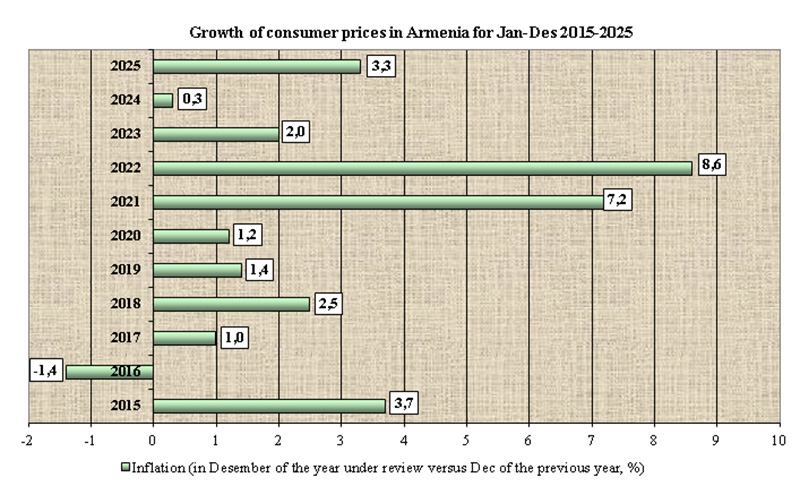



ArmInfo.The level of annual inflation in Armenia reached 9.9% in September, equaling the indicator of the EU countries.
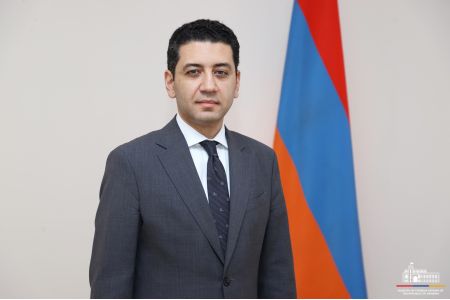
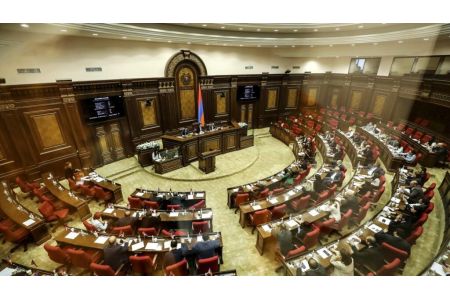
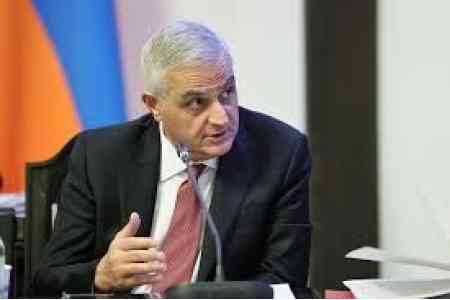
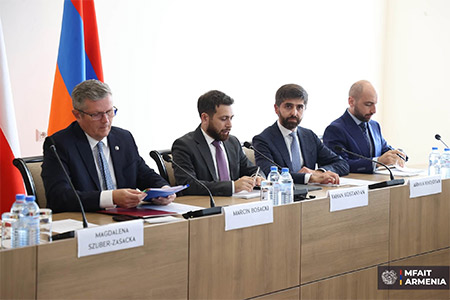
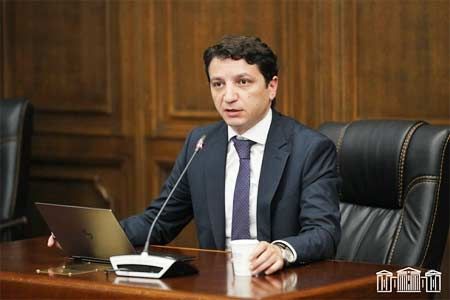
The situation is worrisome in view of recent developments related to the new statements of the Russian Federation on mobilization, due to which a new flow of people came to Armenia, which naturally strengthens the factor of influence of external demand on the level of inflation in the country. This was stated on October 31 by Chairman of the Central Bank of the Republic of Armenia Martin Galstyan at parliamentary hearings during the presentation of the draft state budget of Armenia for 2023.
In this context, the head of the Central Bank indicated that all policies being implemented should be aimed at curbing inflation and bring it to the target within the next year.
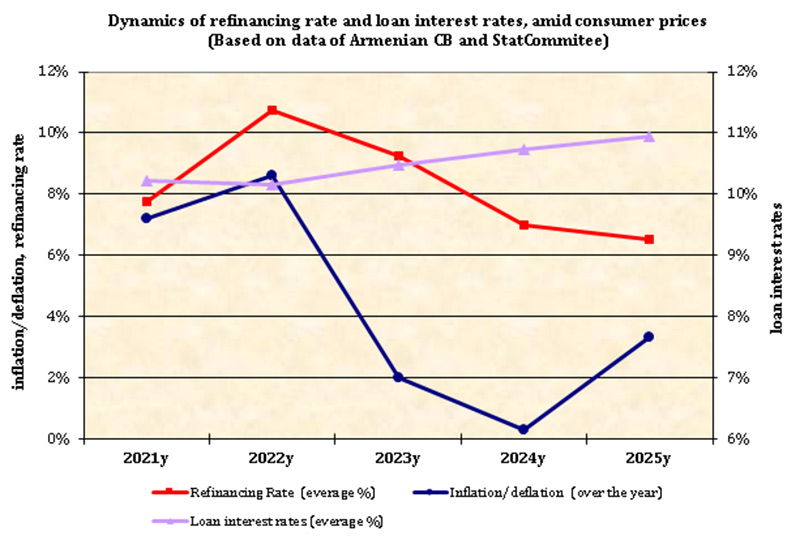
It should be noted that in September 2022, at the level of official y-o-y inflation of 9.9% (compared to 8.9% a year ago), core inflation (calculated by the RA Central Bank) was 10.5% in the same period (against 8% a year ago).
According to the RA Statistical Committee, in January-September, inflation of 8.6% was recorded in the consumer market of Armenia (against inflation of 6.7% a year ago), which was facilitated by a rise in prices for food products by 13%, non-food products - by 6.8%and an increase in tariffs for services by 4.5%, against growth of 9.8%, 8.5% and 1.9%, respectively, a year earlier. The average monthly price increase in the consumer market amounted to 0.6% in January-September 2022, against 0.4% growth a year earlier.
In September 2022, by September 2021, consumer prices increased by 9.9% (against an increase of 8.9% a year earlier) due to an increase in the price of food products by 13.1% and non-food products by 8.1%, with an increase in tariffs for services by 7 .5%, while a year earlier (in September 2021 to September 2020) the increase in prices for food and non-food products was higher - 14.7% and 9.9%, respectively, and the increase in tariffs for services was meager - 1.6%.