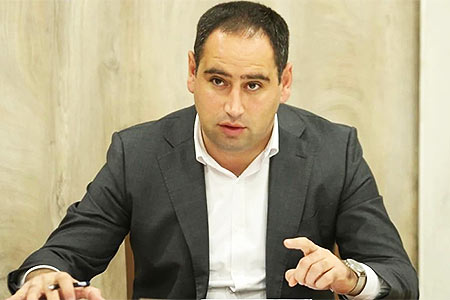


ArmInfo.Bringing the share of electric energy generated by renewable energy-generating facilities up to 15% in Armenia's total energy output is quite realistic, Astghine Pasoyan, Director of the Foundation to Save Energy, said in an interview with ArmInfo.
Armenia has a solar, wind and geothermal energy potential. And applicants for licenses for construction of energy-generating facilities had to "queue up." However, renewable energy development has to be modeled so as to consider both near-term economic growth outlook and market response, especially in the context of market liberalization.
The government-proposed guaranteed purchases of electric energy from the aforementioned energy- generating facilities at fixed tariffs have created a rather attractive environment, with the private sector's active involvement. The solar power producers have until recently received guarantees for up to 20 years.
The formula poses risks involving the compulsory purchase requirements in effect for the Electric Networks of Armenia CJSC. On the other hand, investors prefer the construction of solar power plants in the territories they could purchase, which, however, are not the most advisable in terms of meeting the demand and available infrastructure. On the other hand, market liberalization could enable the producers to find consumers, while consumers could make a choice.
"If your are ready to find a consumer that would purchase electric energy, no problem. All the more so that that it is a question of a sound market principle. But why should the network purchase electric energy at AMD 45 if they can do so at AMD 25," Ms Pasoyan said. So solar power plans should offer beneficial tariffs.
On the other hand, she points out risks for solar power plant construction, as, in contrast to nuclear and thermal and hydro power plants, are incapable of base load operation - their operation depends on the Sun and wind. Otherwise, serious problems could arise. Moreover, sporadic construction of solar power plants would cause a situation similar to that of small hydro-power plants: their construction in agricultural lands could undermine Armenia's food security. The Fund attempted to initiate a bill that would ban the promotion of construction of solar power plants in agricultural lands and allow policy of preferences for non-arable lands.
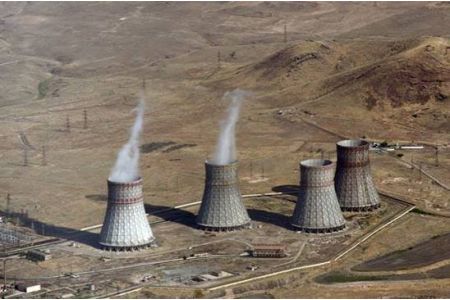
The construction of a new nuclear power plant would pose a risk to renewable and alternative energy projects, as such the energy generated by such a plant would inevitably compete with that generated by the renewable energy generating plants.
"No country is the world is yet meeting its energy demand by using solar or wind power alone, and Armenia is not an exception," Ms Pasoyan said. The tariffs set by nuclear power plants include the economic cost of potential risks. "God forbid a nuclear reactor accident, who is going to compensate the country for the damages?"
Such developments imply the government will cover the costs. "The government would compensate for the damage caused by such an accident, cancer insurance and so on. The Fukushima Nuclear Power Plant is a privately-owned plant, but it is the government that is compensating for the accident-caused damage, at the taxpayers' expense. But if this factor, as well as others, is included in the tariff, especially given the depreciation of the currently operating nuclear power plant, this tariff will not be competitive," Mr Pasoyan said.
She also highlights the importance of a depreciation fund for the construction is a new nuclear plant. Construction of a 1,000 MW nuclear power plant worth a total of $8bln is being actively discussed, as such factors as seismic stability, mountainous terrain, etc. are considered as well.
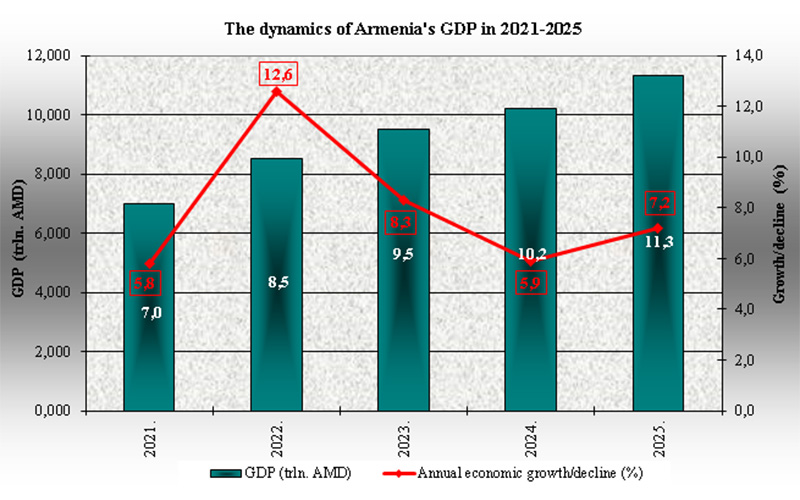
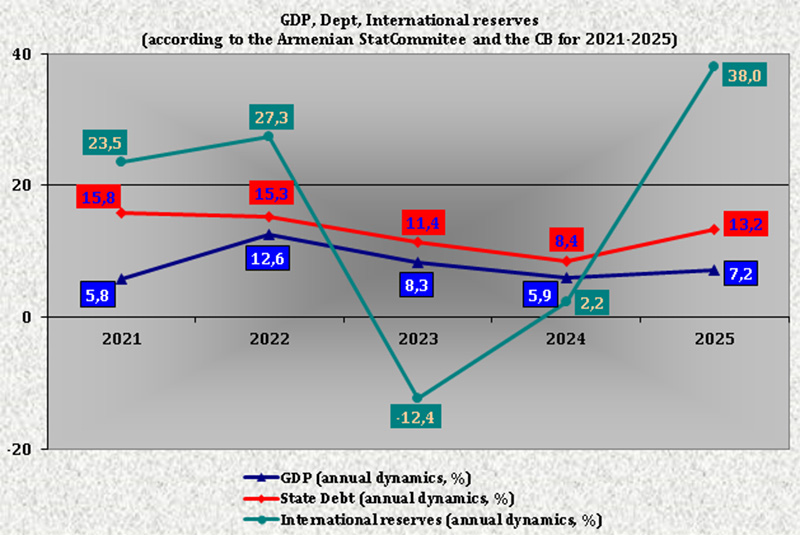
"The government has no such resources at its disposal and can only attract them as loans. However, it implies repayment of loans, which will be possible if Armenia's national debt does not exceed 50% of the GDP. With its $12bln GDP, Armenia's national debt is $10bln. Under the circumstances, lending to Armenia means debtor's prison for the country, with no prospect of getting out of it. The country's economy will not even be capable of serving the interest rates. That would be tantamount to lending a scholarship student the money to purchase a Ferrari or Lamborghini.
"Under the circumstances, attracting such huge funds for a new nuclear power plant would mean 'a loan prison' for Armenia," the expert said. Constructing a nuclear power plant (1,000 MW) is only possible if Armenia will be able to export huge amounts of electric energy, which is an open question with Turkey and Iran constructing their own nuclear plants to cover their energy deficit in the near future," Ms Pasoyan said.
She also points out the problem of nuclear waste recycling. "It is unclear what can be done, especially given the country's small territory. Such large states as Russia and Kazakhstan can afford it," the expert said.
Ms Pasoyan also points out the risk of replacing nuclear plans with thermal power ones, and NPP need refueling once a year. The expert community views the construction of a 500 MW plant as a way out of the situation.
As regards Armenia exploiting its own potential, including such projects as Meghri, Lori Berd and Shnogh hydros, which could also be classified as renewable energy projects, the expert reported debate has been held. Armenia's government believes that all the three projects require private investments. But one thing is clear: the power-generating facilities in question would play an essential role in enhancing Armenia's energy security, as their operation requires only water. The possibility of designing storage plants should be considered as well.
Elaborating on the activities of the Foundation to Save Energy, Ms Pasoyan said it is actively working with Armenia's communities. EU-granted 781,000 Euros were used for constructing solar power plants in Aparan and Artik. The energy surplus is sold to electric networks, with the received funds directed to the extra-budgetary fund for implementation of other projects.
A commercial project was implemented in Artik. A licensed 600 kw solar power plant was constructed in the town, with the energy surplus sold to electric networks and received funds directed to the revolving fund thereby covering the local budget deficit. The town's share in the project was 20%, with the EU's share being 80%.
"This is the first community-owned power plant in the country capable of ensuring monthly budget revenues totaling AMD 3mln. The funds will be directed to further development of renewable energy in Artik. Under an agreement with the Ministry of Territorial Administration and Infrastructure, as part of the Covenant of Mayors - Demonstration Projects (CoM-DeP), this project could be a model for the entire country," Ms Pasoyan said.