ArmInfo. According to a revised forecast by the Central Bank of Armenia (CBA), 6.9% GDP growth is expected this year against the previously forecast 5.8% (against the actual 12.6% growth in 2022), with a further slowdown to 5.5% in 2024.
In absolute terms, the CBA expects the GDP to grow from AMD 8,500bln up to AMD 9,500bln this year, with a further growth up to AMD 10,400bln, according to the CBA Monetary Policy Programme for the 2th quarter of 2023 released late this June.
According to the revised CBA forecast, among the drivers of economic growth will be the construction sector (15.7), services sector (7.8%), %), industrial sector (4.6%), agricultural sector (1.3%). Next year, the industrial sector is expected to record 7.4% growth, with the agricultural sector`s growth expected to reach 2.4%. The construction and services sectors are expected to record 9.8% and 4.8% growth respectively.
Higher unemployment level this year
Despite an upward revision of the GDP forecast in 2023 (6.9% against the previously forecast 5.8%), the CBA has revised its unemployment forecast downward - 13.4% against the previously forecast 12.6% and the actually recorded 13% in 2022. The reason is a higher short-term employment level against a high demand. In the medium term, due to some demand adjustment and higher potential, the unemployment level is expected to near the 15% target. In 2019-2020, 18.1% unemployment was recorded against 17.9%, with 15.3% unemployment recorded in 2021.
Both the officially recorded inflation (by the Statistical Committee) and the core inflation is expected tlo reduce: from 8.9% in 2022 to 3% in 2023, and further down to 2.1% in 2024, with a rise up to 3.6% in 2025. Both the officially recorded and the core inflation were 0.7% in 2019, far from the 4% target. Inflation to fall short of target
The CBA expects 0.4% inflation in 2023 against 8.3% in 2022, with the average annual inflation to go down to 2.2% (this January-December against last January-December) against 8.6% last year, with 3.5% and 2.8% respectively expected in 2024 and 3.7% and 3.9% respectively in 2025, nearing the 4% target.
In its forecast, the CBA cites the FAO index, which, after going down to 127.9 (from 143.6 in 2022) is expected to go up to 129.2 in 2024 and 132 in 2025. The oil price is expected to go down to $78.4 per barrel (from $98.7 per barrel in 2022), with a further decline to $76 in 2024-2025. The copper price, after growing from $9,288.1 down to $8,956 per ton in 2022, is expected to go down to $8,809.5, with an expected rise up to $9,156 in 2024 and $9,383.2 per ton in 2025.
Downward export and import trend in 2024
According to the revised CBA forecast, 18.7% growth in exports is expected in 2023 against 54.4% growth in 2022, with 22.1% growth in imported expected in 2023 against 33.8% in 2022, a decline of 2.9% and 4.5% respectively, with an expected growth of 4.4% and 4.6% respectively in 2025. In 2021, both exports and imports showed growth of 19.1% and 16.9% respectively against the respective decline of 3.9% and 17.7% in 2020, thus exceeding 9.4% and 10.8% respectively in 2019.
The CBA designates this deceleration in exports and imports this year as some stabilization of the rates after an upsurge in 2022. But opportunities for exports to Russia are amplifying given some growing potential. In terms of export of services, international visitors are expected to continue arriving in a great numbers. IT services are expected to continue showing a high-rate growth despite some slowdown in the second half of 2023.
Substantial decline in transfers from Russia, USA
According to the revised CBA forecast, the upward trend in the net inflow of money transfers is expected in the direction of both Russia and the USA due to a deceleration in economic activity in the countries Armenia is cooperating with. The share of private transfers in the GDP is expected to decrease in 2023 down to 4.5% against 8.3%, to increase up to 4.8% in 2024 and decrease down to 4.2% in 2025. In 2022, the net inflow of private money transfers showed a sharp increase, 3-fold, from 53.8% increase due to an increase in transfers from Russia, which can be explained by a great number of immigrants from Russia, who bought their capital here.
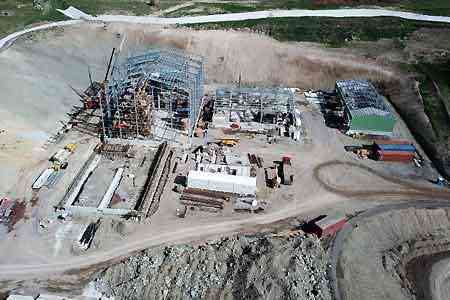
As a result, the current account surplus/GDP ratio was 0.1% in 2022 against the 3.7% account deficit/GDP ratio in 2021, with a current account deficit/GDP ratio of 1.7% expected this year, to be followed by a current account deficit/GDP ratio of 1.5% in 2024 and 1.8% in 2025. The reason is the reoperation of the Amulsar mine and subsequent positive effect from the export of precious metals.
Revised IMF, WB forecasts
In the first half of June 2023, the IMF and the WB revised their forecasts predicting higher rates of economic growth in Armenia than previously forecast. According to the IMF forecast, 5.5% GDP growth is expected in Armenia in 2023 against the previously forecast 4.5%. The WB forecasts 4.4% GDP growth against the previously forecast 4.1%. This May, the EBRD revised its forecasts for GDP growth for Armenia upward - 4% to 5%.
The IMF and WB consider economic outlook for 2023 generally positive despite the remaining high risks. The forecast is subject to risks as well due to the complex foreign environment, including regional tensions, harsher global financial conditions, slower economic growth recorded by the major trade partners.
According to the IMF, macroeconomic policies need to prevent overheating of the economy in the short term, while supporting inclusive and resilient growth in the medium term. To elaborate:
Should growth and revenues be stronger than projected, building fiscal buffers is a priority. At the same time, revenue mobilization efforts should continue, including by broadening the tax base and tackling informality.
Decisive and pro-active monetary policy tightening has been successful in containing inflationary pressures, but monetary policy needs to remain vigilant and data dependent. Financial sector risks related to the real estate sector require close monitoring by strengthening supervisory tools.
To unlock Armenia's long-term growth potential, continued progress with implementation of structural reforms is needed,including by boosting trade links and diversification, enhancing access to finance, completing governance reforms, and improving climate change resilience.
According to the RA Statistical Committee, this January-May saw 12.5% growth in economic activity against the 10.2% growth last January-May. It was accompanied by an accelerating growth in exports and imports - up to 93.3% and 83.3% respectively (against 27.5% and 42.2% respectively the previous year). This May, in Armenia's food market, the annual inflation was 1.3% against the previous 9%, which was mainly due to a fall in prices for food and oil products, with rising prices for services.