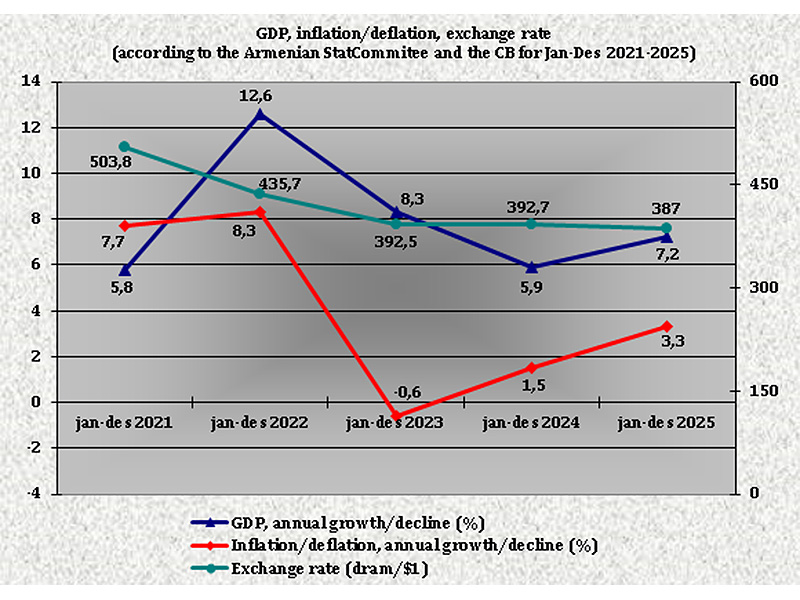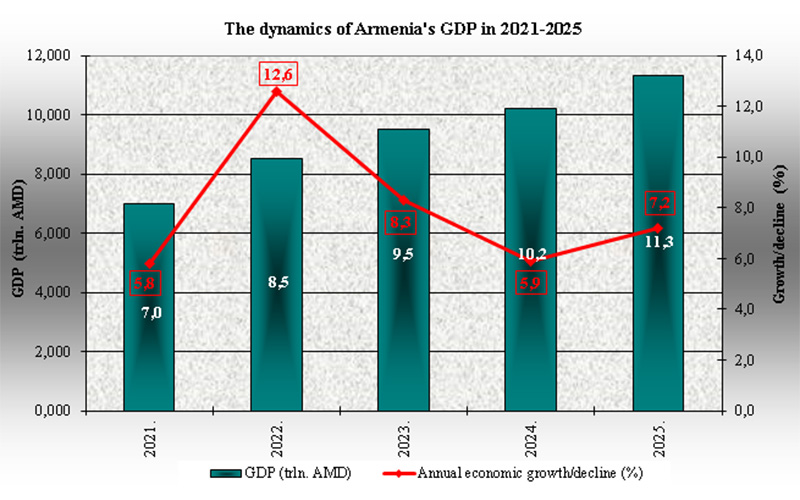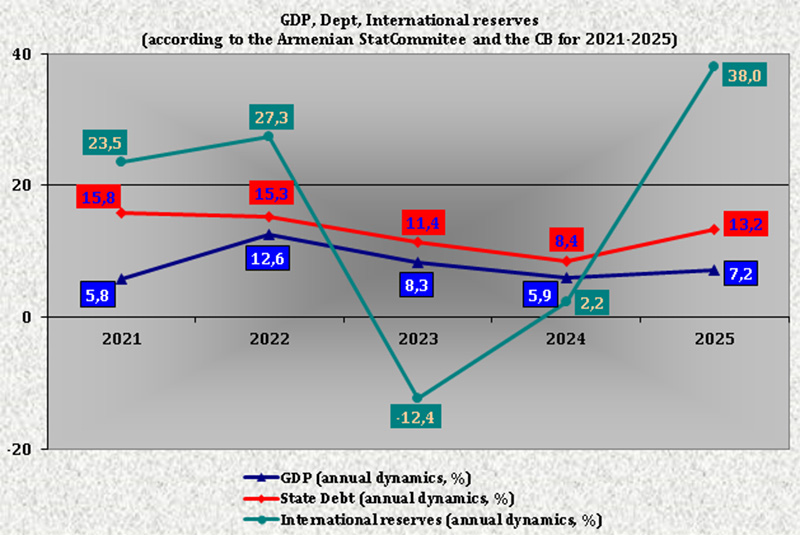



ArmInfo. The growth of economic activity in Armenia in Jan-July 2023 slowed down to 10.4% per annum (from 13.1% a year earlier), affecting the pace of exports and imports. In July of this year by July 2022, the growth of economic activity slowed down more noticeably - to 6% (from 19.4% a year earlier), while in July 2023 alone slowing growth to 7.6% from June 9.9%, which was more pronounced in July 2022 - up to 8.5% from June 17%, according to the final data of the RA Statistical Committee.
The growth of economic activity in Jan-July 2023 was largely determined by the trade sector - 23%, and a little less by the construction sector - 17.2% as well as by the service sector - 14.9%, against which the growth of the industrial sector slowed down to 0.5% stagnation, and the energy complex was in a 3.5% decline. Starting from 2019, data on the agricultural sector are published only once a quarter in the reports of the statistical committee. A year earlier, in Jan-July 2022, all these sectors showed growth: the service sector - 27.5%, the energy complex - 14.9%, the construction sector - 13.6%, the trade sector - 12.5%, the industrial sector - 7%.
The price index of industrial products in Jan-July 2023 did not change compared to the same period in 2022, while increasing 6.9% in July 2023 compared to July 2022 by, and in July 2023 compared to June 3 alone, growth slowed to 0.1%. A year earlier, in similar periods, a different dynamics was recorded: in Jan- July 2022 compared to the same period in 2021 the price index of industrial products increased by 6.3%, in July 2022 compared to July 2021 it decreased by 2.2%, and in July 2022 alone it accelerated in the decline to 4.9% from 2.9% in June.
On a monthly term(for July 2023), the construction sector gave a decisive impetus to the growth of economic activity, despite a strong slowdown in rates from June 20.1% to the current 12%, thereby repeating last year's slowdown in the uptrend - from June 21.9% to July 12.5%. Next in terms of growth is the trade sector, accelerating from 5.5% in June to 9.4% in July, while a year earlier, growth slowed from 12.8% to 9.3% in July. The energy complex slowed down in growth from 8.3% in June to 4.5% in July, while last year growth accelerated from 6.4% in June to double-digit 13.8% in July. They are far behind the industrial sector, which slowed down growth from 2.8% in June to 1.3% in July, which is very different from the July dynamics of last year, when a deterioration to a 3.2% decline was recorded (from June 17.1% growth). The services sector showed the least growth in July - 1%, as in June - a meager 0.7%, which nevertheless looks better than the July dynamics of last year, when 8% growth was replaced by a 0.3% decline.
In y-o-y terms (July 2023 to July 2022), the growth of economic activity was observed not in all industries, in particular, the energy complex and the industrial sector slid into recession by 8.5% and 2.4%, respectively (against growth by 15.6% and 13.7 % a year earlier). The largest growth was provided by the trade sector and the construction sector - by 20.4% and 17.8%, respectively, showing almost the same rates a year earlier - 21.3% and 16.8%. As for the service sector, here the y-o-y growth rate has slowed down significantly - from last year's leading 30.6% to the current 5.8%. According to statistical data in Jan-July 2023, the leadership in absolute terms is held by the trading sector with a volume of 2.8 trillion drams ($7.1 billion). The services sector returned to the second place- 1.7 trillion drams ($4.3 billion), displacing the industrial sector to the third place - 1.4 trillion drams ($3.6 billion). And, due to the lack of data on the agricultural sector, the fourth place is occupied by the construction sector - 222.5 billion drams ($571.4 million). The volume of electricity generation in Jan-July 2023 amounted to 4938.8 million kWh, of which 668.6 million kWh in July alone.
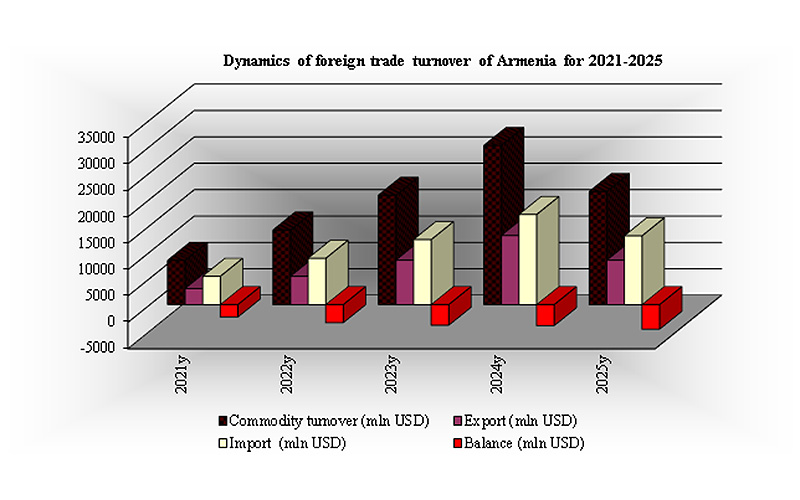
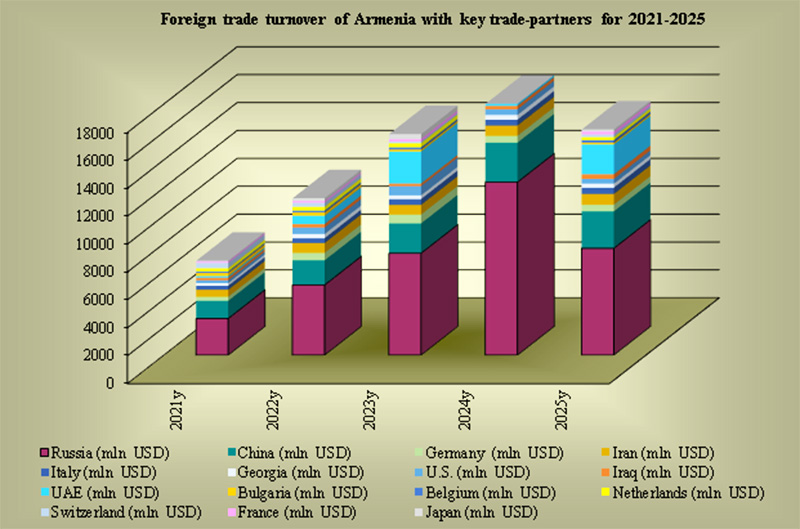
Against this background, Armenia's foreign trade turnover in Jan-July 2023 exceeded 4 trillion drams ($10.4 billion), with an acceleration of y-o-y growth from 47.7% to 62.6%. This was due to the acceleration of growth in both exports and imports. In particular, the volume of exports increased in y-o-y terms by 62.1% to 1.5 trillion drams ($3.8 billion), and imports - by 63% to 2.5 trillion drams ($6.5 billion), which was observed at a somewhat modest pace a year earlier - 43.9% for exports and 50.1% for imports. In July 2023 alone, the foreign trade turnover lingered in the decline with a slowdown from 7.4% in June to the reported 2.4% due to delayed imports in the recession with an acceleration of rates from 5.2% to 6.6%, with the dynamics of exports from 11% decline by 5.3% growth, while a year earlier the reversal of the dynamics of foreign trade turnover from June 20.2% growth on the July 0.5% decline was due to the deterioration of the export trend from 38.2% growth to 4.9% decline and slowdown in import growth from 10.4% to 2.5%. And in July 2023, compared to July 2022, a strong slowdown in the growth of foreign trade turnover from 67.7% to 18.1% was provoked by the same slowdown in the growth of exports from 82.2% to 15.6% and imports from 58.8% to 19.7%.
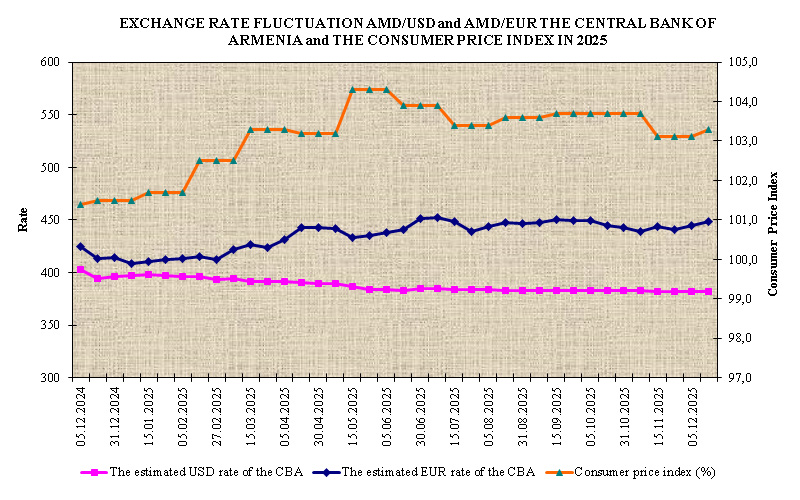
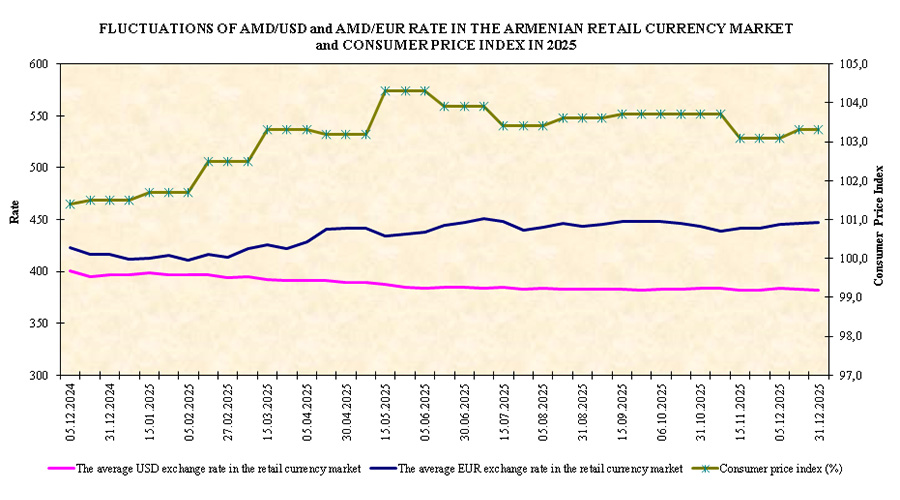
The average settlement rate of the dram in July 2023 was 386.54 AMD / $1, and in Jan-July 2023 - 389.33 AMD / $1, against 410.03 AMD / $1 - in July 2022 and 460.06 AMD / $1 - in January-July 2022