

ArmInfo.The Executive Board of the International Monetary Fund (IMF) completed the third review under the Stand-By Arrangement (SBA) with Armenia. The completion of the review enables access of SDR 18.4 million (about US$24.5 million), bringing total access to SDR 73.6 million (about US$97.7 million). The SBA was approved by the IMF's Board on December 12, 2022 (see Press Release No. 22/429). The Armenian authorities continue to treat the arrangement as precautionary. The Executive Board's decision on the third review of the SBA was taken without a meeting.
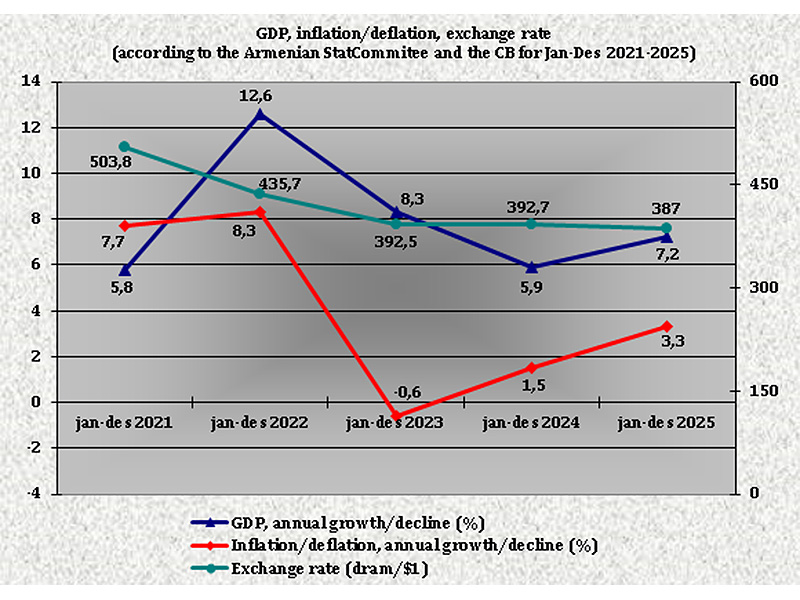
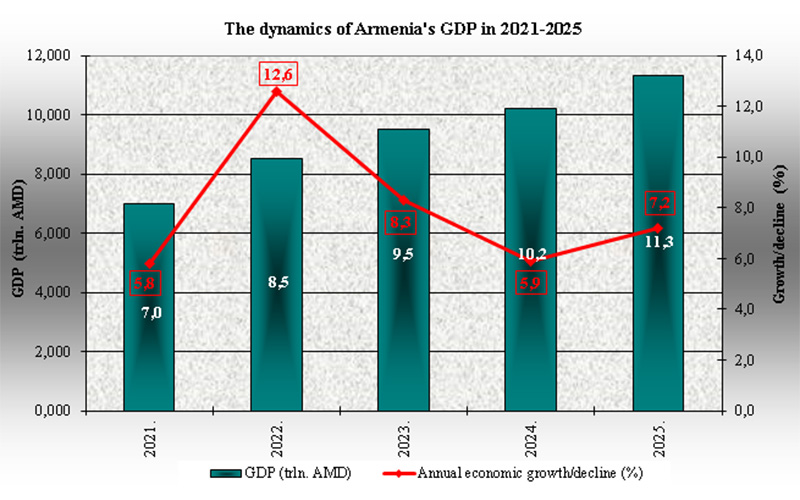
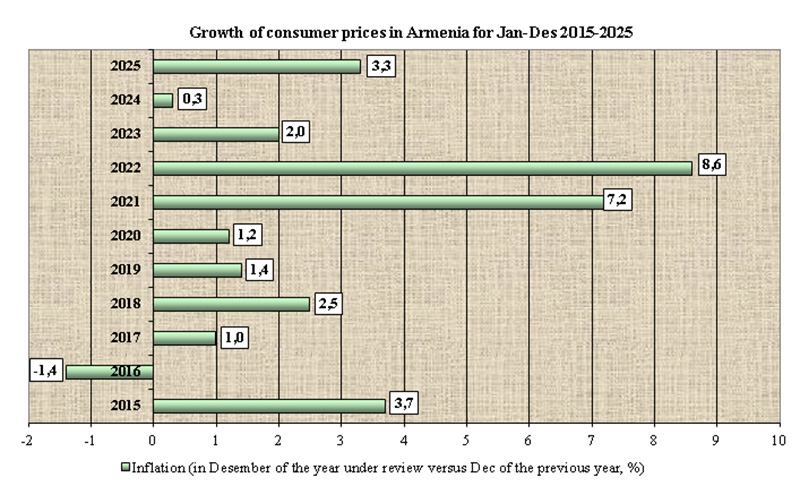
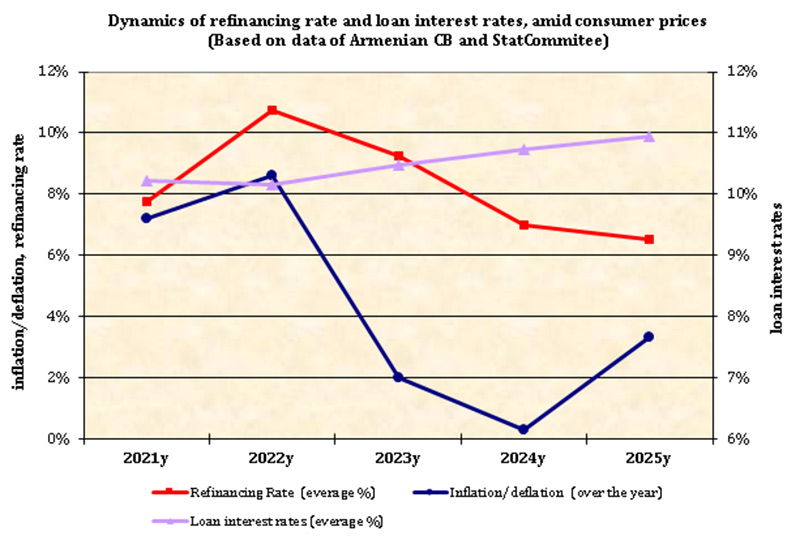
Armenia's strong growth momentum continued in 2023, with the economy growing by 8.7 percent, supported by robust private consumption, trade, and investment. Inflation declined significantly, reaching - 0.7 percent in April year-on-year, mainly due to lower global and domestic prices of key food items, Dram appreciation, and tight financial conditions. The current account deficit remained contained at 2.0 percent of GDP in 2023, supported by strong tourism. The 2023 fiscal deficit at 2 percent of GDP was lower than anticipated due to spending under-execution. The banking system has strong capital and liquidity buffers, and its profitability continues to remain high.
Growth is expected to moderate but to remain robust at 6.0 percent in 2024, driven by consumption and public capital spending. Inflation is expected to pick up in the second half of the year. Risks to the outlook are elevated, stemming from geopolitical and regional tensions, potential slowdown in major trading partners, lower trade, and capital outflows. Growth could also surprise on the upside in the event of stronger-than-anticipated export receipts, and faster implementation of structural reforms.
The program is broadly on track. All quantitative performance criteria and indicative targets for end- December 2023 were met. However, low inflation breached the lower outer MPCC band. Progress on structural benchmarks continues, with all but two completed, some with delay.
The uncertain outlook calls for continued prudent policies and steadfast implementation of structural reforms:
Fiscal policy should strike a balance between preserving macro-fiscal stability and accommodating rising spending pressures. Careful spending prioritization and decisive tax policy and revenue administration efforts will be needed to create fiscal space, including for social integration, security spending, further infrastructure development, and a healthcare overhaul.
The Central Bank of Armenia (CBA) has successfully lowered inflation, but inflation is likely to remain volatile, and future policy rate decisions should remain dependent on the evolution of inflation and inflation expectations. The flexible exchange rate should continue to serve as a key shock absorber, with foreign exchange interventions limited to addressing disorderly market conditions and opportunistically building reserves to maintain strong buffers.
Structural reforms should focus on strengthening revenue mobilization, fiscal risk and public investment management, the CBA's supervisory framework, the employment and social assistance programs, export diversification, enhancing governance, and reducing corruption vulnerabilities.
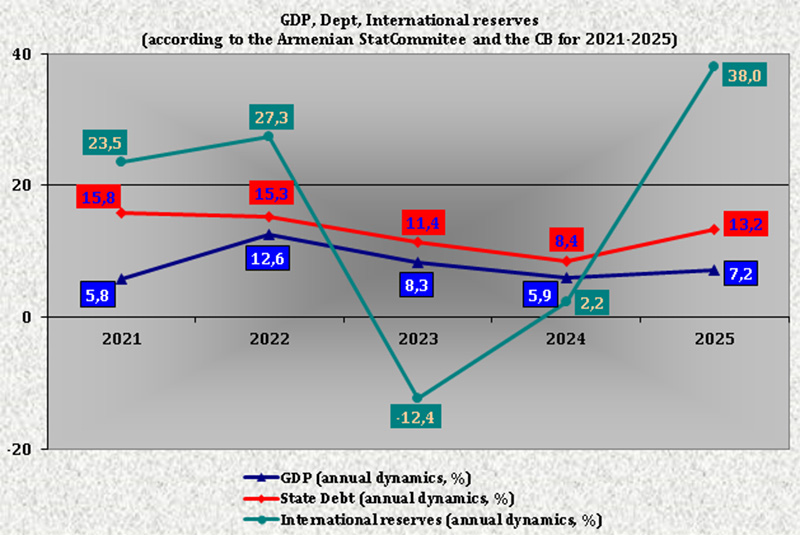
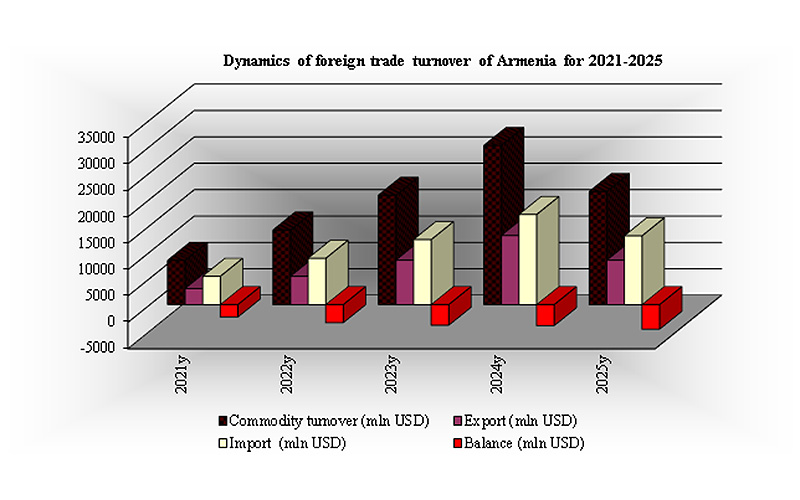
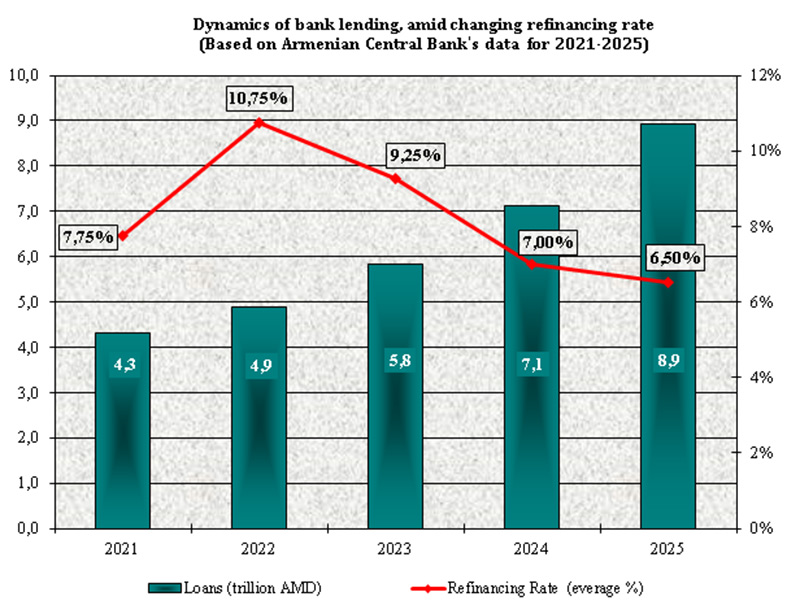
The IMF forecasts Real GDP (percent change) at $8428 in 2024 and $9005 in 2025 against $8095 in 2023; Gross domestic product (in billions of drams) 9,503 in 2023, 10.4 in 2024 and 11.4 in 2025; Exports of goods and services (percent change) 1.4% in 2024, 10.4% in 2025; Imports of goods and services (percent change) 2.8% in 2024, 5.4% in 2025; Current account balance (in percent of GDP) 2.1% in 2023, 2.5% in 2024 and 4.9% in 2025; 3.3% inflation at the end of 2024, 4% inflation in 2025; Unemployment rate (in percent) 13% in 2024 (against 12.6% in 2023) and 13.5% in 2025; Private sector credit growth (percent change) 18.5% in 2023, 11.4% in 2024 and 9.2% in 2025; Investment and saving (in percent of GDP) 20.6% in 2024 (against 21.3% in 2023), and 20.4% in 2025; Gross international reserves (in millions of U.S. dollars) $3.8bln in 2024 ($3.6bln in 2023), and $3.5 in 2025. Public and publicly-guaranteed (PPG) debt (in percent of GDP) 52.5% in 2024 (50.5% in 2023) and 53.1% in 2025; Central Government's PPG debt (in percent) 48.1% in 2023, 49.9% in 2024 and 50.8% in 2025; Share of foreign currency debt (in percent) 56.3% in 2024 (against 52.7% in 2023) and 57.8% in 2025.
The SBA's reserve program is viewed as a precautionary measure aimed at supporting the government's policies and reform agenda aimed at preserving economic and financial stability and supporting strong, inclusive and sustainable growth.
The World Bank predicts a slowdown in GDP growth in Armenia in 2024 to 5.5% and in 2025 to 4.9%. The EBRD forecasts Armenia's GDP growth by 6.2% in 2024, with a slowdown in 2025 to 4.8%. Almost identical GDP growth in Armenia is predicted by international rating agencies for 2024, in particular S&P Global Ratings expects a slowdown to 6.2%, and Fitch Ratings - to 6%. The Central Bank of Armenia, with the transition to a new improved system for developing monetary policy (FPAS MARK II), began to calculate the GDP forecast for several scenarios from 2024, henceforth indicating not a specific forecast rate, but an expected range. Thus, according to the forecast of the Central Bank of Armenia updated in June, GDP growth in 2024 will be in the range of 6.8-6.1% and will slow down in 2025 to 6.1-3.8%.