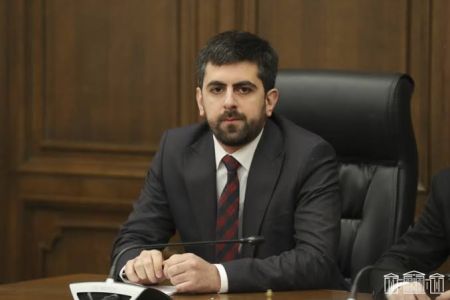
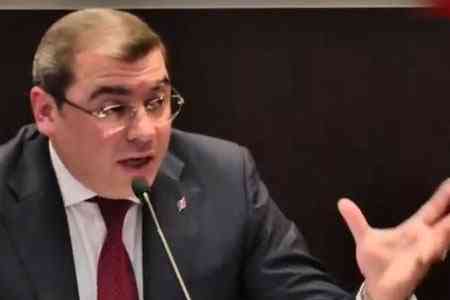
ArmInfo. Artificial barriers cannot be created for citizens who have planned to import electric vehicles several months in advance. This was stated on June 12 in the National Assembly of Armenia during discussions on the draft state budget for 2025 by Arsen Torosyan, a member of the National Assembly from the ruling Civil Contract faction.
He recalled that earlier the State Revenue Committee issued a statement that the quota of the Eurasian Economic Union for duty-free import of 8 thousand electric vehicles from third countries to Armenia in 2025 will cover vehicles no older than 3 years. In this regard, the deputy stressed the need to adhere to previously assumed obligations and not create additional problems. "We cannot limit the benefits for the import of electric vehicles to Armenia halfway," the deputy believes, pointing out that many citizens plan to import electric vehicles many months in advance.
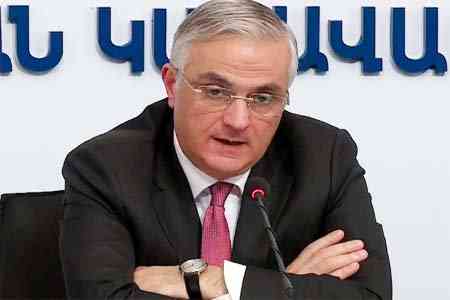
In response, the RA Minister of Finance Vahe Hovhannisyan noted that the said measure is aimed at preventing the country from turning into a large dump of electric vehicles. The department, as its head noted, is working on compiling an analysis of all the pros and cons associated with the import of electric vehicles, which he will present to the country's parliament. Let us recall that in October of this year, at a meeting of the RA government, RA Deputy Prime Minister Mher Grigoryan proposed introducing recycling fees for vehicles with electric engines. "Among the privileged countries, we provide the largest volume of privileges for the import and operation of electric vehicles. This gives about a 30% price effect compared to other countries," he said.
At the same time, according to the Deputy Prime Minister, Armenia is among the few countries that have not yet established recycling fees, which again is a serious incentive for importing electric vehicles, but at the same time, a serious challenge in the future. "We need to establish fees, ince the costs of recycling these vehicles far exceed the costs of traditional ones," he said. In addition, as Grigoryan noted, it will be quite difficult to obtain a preferential regime within the EAEU in the future, since Russia, Kazakhstan, and Kyrgyzstan are planning to manufacture or localize the production of such vehicles. "This suggests that obtaining quotas in the future will become more difficult," he noted.