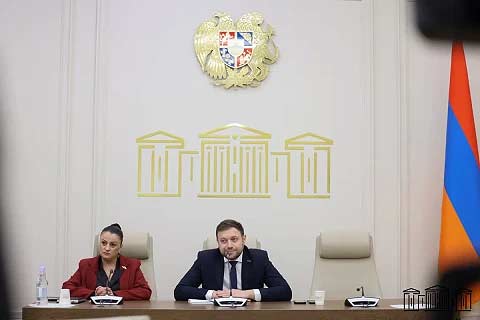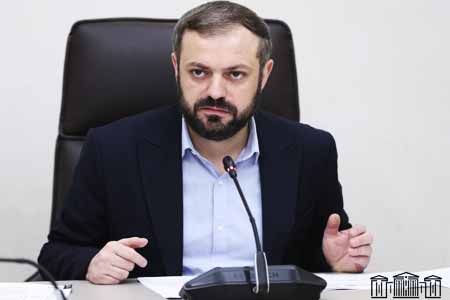


ArmInfo. Collaboration between Armenia and Georgia holds great potential in key sectors that can contribute to the development of the business environment and attract investment. This was stated by RA Minister of Economy Gevork Papoyan in an interview with kvira.ge.
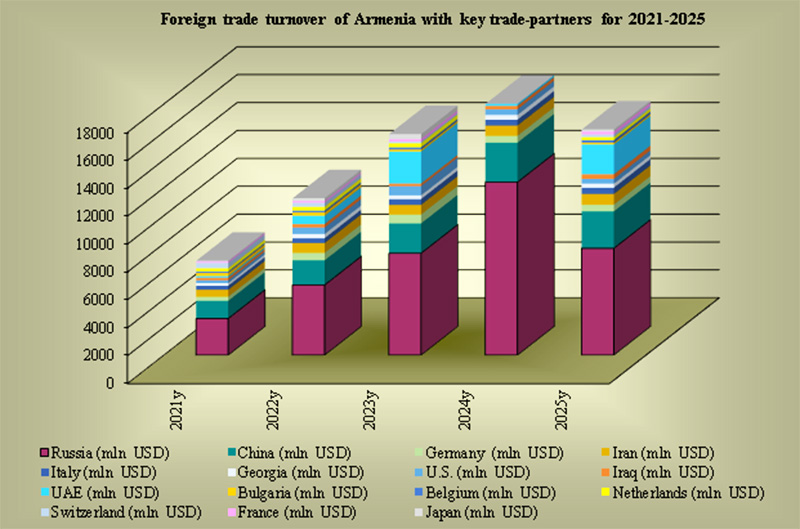
According to him, trade and economic relations between Georgia and Armenia are steadily growing with significant potential for further development and diversification. The minister noted that Armenia's foreign trade turnover with Georgia in January-September 2024 was $702.6 million, a 13.5% decrease compared to the same period last year. In January-September 2024, Armenia's exports amounted for 17.6% in trade turnover with Georgia, while imports made up the remaining 82.4%. In January-September 2024, exports totaled $123.7 million, which is 12.3% more compared to the same period of the previous year, while imports amounted to $576.1 million, a decrease of 17.6%. The main goods exported by Armenia to Georgia are cigarettes and cigars ($23.5 million), semi- finished products made of iron or non-alloy steel ($18.9 million), and bottles, jars and other glass containers ($14.8 million). These goods account for 50.6% of total exports to Georgia in January- September 2024.
In return, Georgia mainly supplied cars and other vehicles ($76.1 million), ethyl alcohol, alcoholic beverages ($35.9 million), and medicines ($27.7 million) to Armenia. These goods, as Papoyan noted, account for 24.3% of all imports from Georgia in January-September of this year. The minister noted that the main factor attracting Armenian capital to Georgia is the geographical proximity of the countries and common cultural values, as well as historical and cultural ties that facilitate relations and business processes. Among the promising areas for investment, he named tourism and the hotel business.
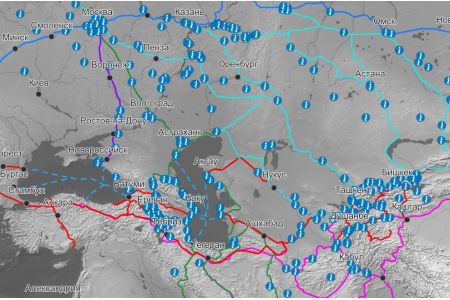
Papoyan highlighted the potential impact of infrastructure projects like the "Crossroads of Peace" and the "Black Sea Submarine Cable" on the region and on the economic relations between Armenia and Georgia. "The Crossroads of Peace project", initiated by the Armenian government, aims to create a transport and logistics infrastructure connecting the Black Sea, the Persian Gulf and the Gulf of Oman through Armenia. This project involves the development of road and rail routes, pipelines, power lines and Internet cables, which could enhance trade and economic ties between the countries of the region. The Black Sea submarine cable will establish connectivity between Black Sea countries, including Georgia, and Europe.
He emphasized the importance of renewable energy sector projects and energy efficiency initiatives aimed in attracting significant investments in the energy sector. These developments not only ensure energy security, but also generate additional jobs and foster new business opportunities. The role of digital technologies and information communications is also important. Strengthening IT infrastructure and promoting digitalization in business processes in both countries will open up new opportunities for startups and innovative companies, thereby attracting foreign investors to high-tech industries. Collaboration between the countries in agriculture and the food industry can also boost production volumes and improve product quality, leading to the creation of new export markets and investment opportunities in the agro- industrial complex.
"The development of tourism is also an important aspect. Joint promotion of the potential of Armenia and Georgia will contribute to the growth of the tourism industry. This will also strengthen economic ties between the two countries, ultimately improving the business climate in the region as a whole. Additionally, enhancing transport corridors, improving infrastructure and cooperation, modernizing customs procedures will increase trade volumes and reduce costs," the minister concluded.