

ArmInfo. The draft law on reducing daily working hours by one hour presented by the Armenian government smacks of populism. This was stated by the well-known Armenian economist Suren Parsyan in an interview with ArmInfo.
According to him, the document not only fails to take into account international messages, but also national peculiarities. International experience shows that reducing working hours leads to additional expenses for the employer. For example, if an employer works 24 hours a day, he must attract additional labor to make up for the lost three hours, and this leads not only to financial but also to administrative expenses. The governments of a number of countries take on these expenses as part of their assistance programs so that businesses can go through this stage without incident. In the Armenian reality, changes are made hastily, without taking into account the interests of businesses, and are very often declarative in nature. "In particular, it is proposed to establish a 7-hour working day, but in reality this initiative may be extended to the public sector, while in the private sector everything will remain as it was, since the employer will strive to keep its employees at work for another 1 hour, especially considering that the application of the legislative initiative will lead to additional costs for it," Parsyan said.
He added that the proposed amendments are rather populist in nature during the pre-election period, which is supposedly intended to demonstrate the social focus of the initiative. But this, as the economist noted, can hardly be called a reform; it will rather become another test for business, which will lead to new problems. "Reforms should not lead to new problems, on the contrary, they should solve these problems, and not lead to new headaches for entrepreneurs," the economist said.
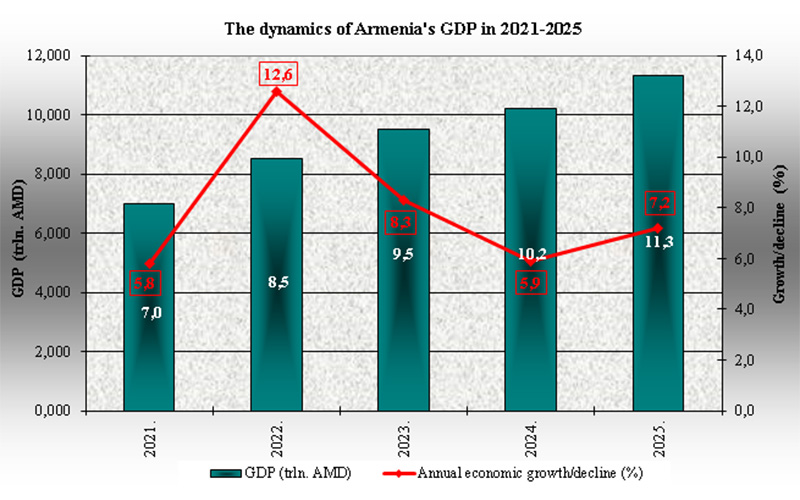
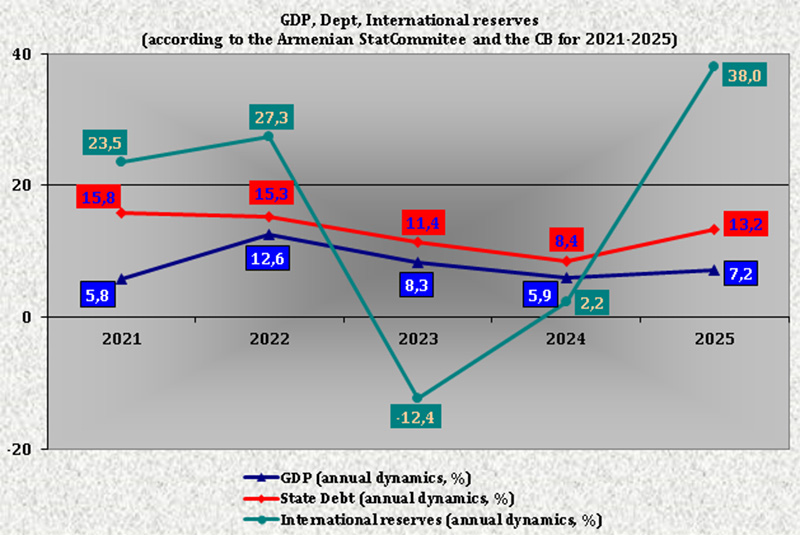
Answering the question about how the reduction of the working day will lead to GDP growth, which is officially stated, especially against the background of the previous position of the government, which refused to recognize the day of remembrance of the dead as a day off and went for the reduction of New Year holidays, citing that their application could negatively affect GDP growth, Parsyan once again pointed to the populist nature of the bill. He noted that the innovation will not lead to any significant impact on economic growth, especially against the background of large and significant doubts about the sharp increase in labor productivity. Against the backdrop of a labor shortage, it will be very difficult to fill the existing gap. "This is another populist step, which is supposedly intended to show people the authorities' concern for the well-being of citizens, but in practice it will not have a significant impact on the country's economy," the economist emphasized.
On March 3, at the initiative of the Chairperson of the RA National Assembly Committee on Labor and Social Affairs Eriknaz Tigranyan, a discussion of the draft law on reducing daily working hours by 1 hour took place. Eriknaz Tigranyan emphasized the importance of discussions with partners, which provide an opportunity to hear opposing opinions, as a result of which the draft law submitted for public discussion, but not yet submitted to the National Assembly for discussion, will be improved.
The Minister of Labor and Social Affairs of the Republic of Armenia Narek Mkrtchyan noted that the goal of the draft law is to increase the productivity and efficiency of employees, as well as to establish a balance in the ratio of family and work during the working day. The main issues discussed were assessing the impact on GDP per capita, providing employers with a choice, extending the regulation only to public sector employees, the impact on the economy, etc. Representatives of the executive body, using examples of international experience, cited statistical and research data based on the successful experience of specific countries, which prove that reducing working hours has a positive effect on physical and mental health, as well as on the productivity of workers and on GDP growth.
Meanwhile, the position of the Republican Union of Employers of Armenia is negative, based on the possible negative impact of the innovation on the economy and employers.
In this regard, Eriknaz Tigranyan noted that this discussion was the first in a series of meetings on the project, and in the near future, discussions will be held with a wider composition, which will be aimed at making the project as acceptable as possible for all interested parties based on factual information.