ArmInfo. Former assistant to Prime Minister Nikol Pashinyan and brother of the ruling NA faction MP Hayk Sargsyan - Nairi Sargsyan proposes returning to the previous system of product labeling, since the new one is unreliable and has already become a real "headache" for businesses.
Digital labeling with QR codes has been gradually introduced for goods in the EAEU space for several years now in order to fully track their circulation down to the last unit of goods. Based on the EAEU pilot projects in Armenia, such labeling was used for some textiles and a number of other goods. Thus, labeling with identification marks is mandatory for the following goods: from March 1, 2025 - carbonated and still drinks, soft drinks, pasta, tea and coffee, animal and vegetable oils, products containing chocolate and cocoa, canned goods, beer and beer drinks; from June 1, 2025 - dairy products, meat products, sausages and animal feed; from September 1, 2025 - petroleum products, paints, varnishes and dehydrators; from June 1, 2025 - medicines, vitamins, perfumes, cosmetics, hygiene and care products. Stickers with QR codes are issued by the local company E-mark, which has been selected as the national operator of digital labeling in the country (the other 4 EAEU countries have selected their own operators).
Nairi Sargsyan recalls that the previous stamps, made using high-quality holographic printing, were purchased by the state for 3.5 drams and provided free of charge to importing and manufacturing companies. Currently, in order to print a black and white stamp on ordinary white paper, enterprises must pay 7.2 drams, of which 4.2 drams to the private company E-mark for receiving the generated code and 3 drams for printing it at a printing house. The resulting QR code can even be printed at home on ordinary printers, he notes.
Previously, the state paid for the label, now the businessman does,
The label is printed at a price twice as high,
Previously, it was extremely difficult to counterfeit the label (if you looked at it at an angle, different images appeared), today it is very easy to do,
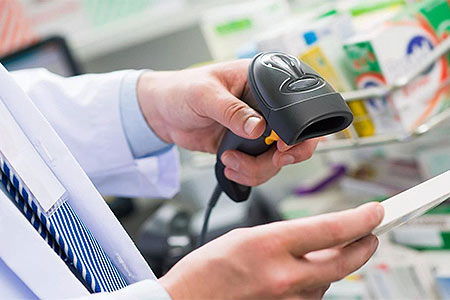
Manufacturers, importers and sellers are faced with a serious headache, starting with ordering the code, printing it and scanning QR codes, as well as at the sales stage (previously, for example, when buying 2 blocks of water, the seller could scan 1 barcode and multiply by 24, now he has to scan them all one by one, each twice)," Sargsyan notes.
In addition, Nairi Sargsyan wonders why the State Revenue Committee used to announce an open tender for printing stamps, and now the code generation program has been transferred directly to one company? Or maybe there is a company that would provide the same service at a price three times cheaper, and enterprises would save several billion drams?
Taking into account the above, I suggest that our authorities consider the possibility of returning to the previous system. If the goal is to save money for the state budget, then old holographic stamps can be made chargeable," Nairi Sargsyan sums up.