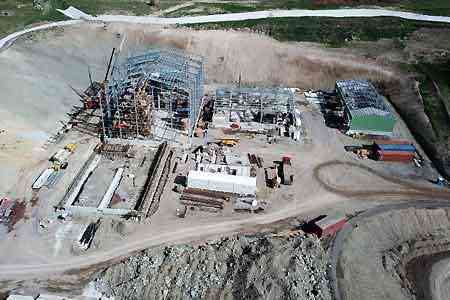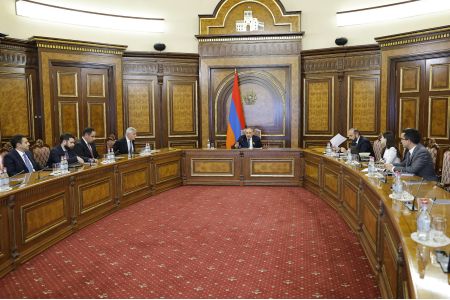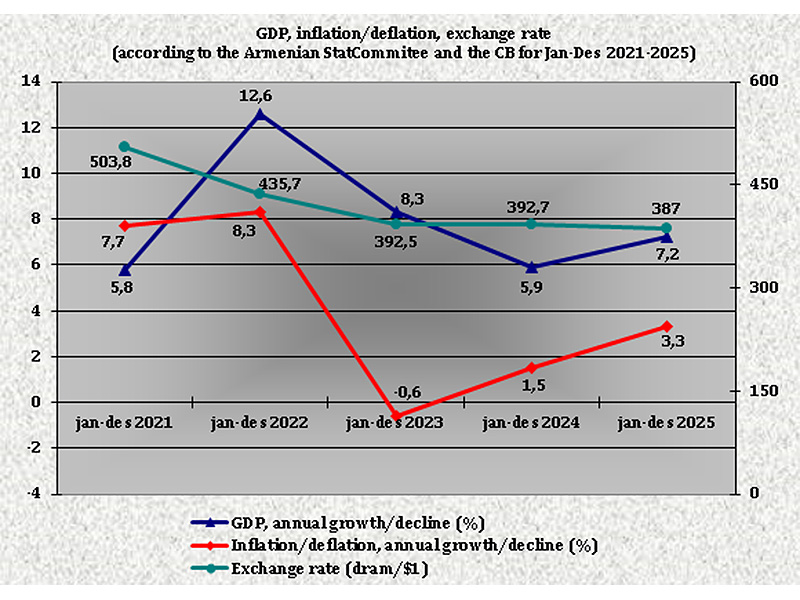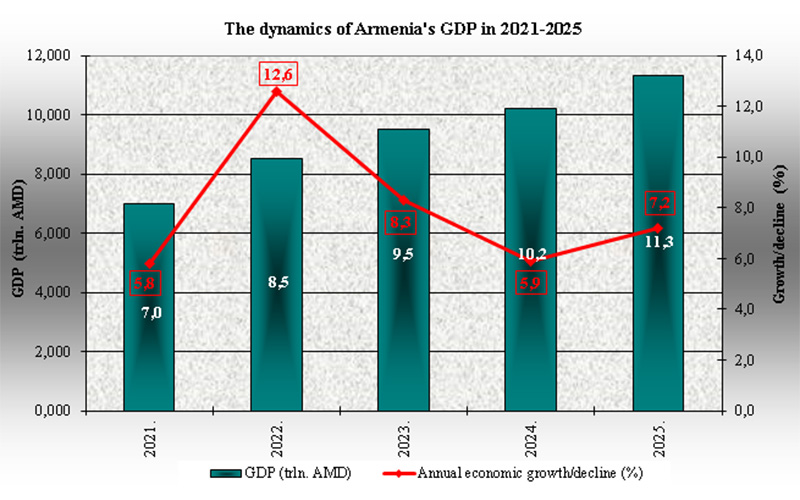


ArmInfo. In 2025, if current economic developments continue, the Sotk mine operates smoothly, the Amulsar deposit is restarted, and structural reforms are implemented, economic growth in Armenia is projected to be around 5.1%. In the medium term, average growth is expected to be at 5.3%, as stated in the Medium-Term Expenditure Program (MTEP) for 2026-2028, which was approved on June 5 at a regular government meeting.
Specifically, as stated in the document, GDP growth is forecasted to be 5.1% in 2026, 5.3% in 2027, 5.2% in 2028, and 5.5% in both 2029 and 2030. The deflator is anticipated to be at 2.5% in 2025 and 3% in the subsequent years (up to and including 2030). Nominal GDP is expected to reach 10,976.1 billion drams in 2025, which is 84 billion drams more than the figure planned in the state budget for 2025. Over the medium term, nominal GDP is projected to grow at an average rate of 8.5%, amounting to 16,488.6 billion drams in 2030 (11 trillion 887 billion drams in 2026, 12 trillion 893 billion drams in 2027 and 13 trillion 976 billion drams by the end of 2028).
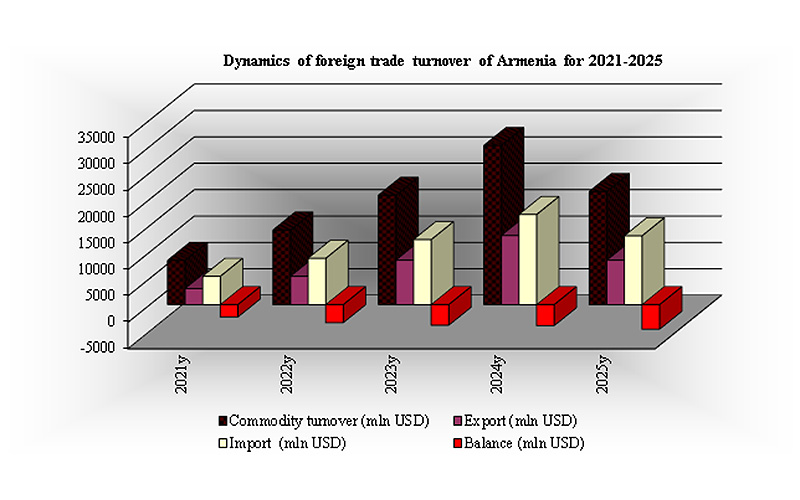
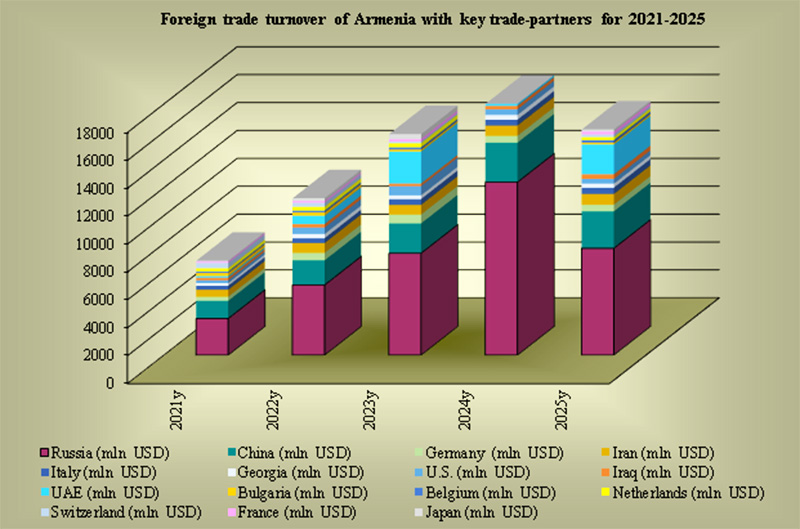
Given the slowdown in economic activity and a decrease in the role of re-exports in 2025, a significant reduction in both exports and imports is expected (a decline of 36.6% and 33.5%, respectively). This is expected to lead to a worsening of the negative trade balance and an increase in the positive balance of services in 2025, resulting in the current account deficit rising to 5% of GDP. In the medium term, as the positive factors form 2022-2024 level out, the current account deficit is forecasted to stabilize around the long-term equilibrium level, assuming the neutralization of the impact of the positive factors.
At the beginning of the medium term, following a certain increase in the state budget deficit and debt, along with the formation of "advance" resources for urgent needs and structural reforms, fiscal policy will focus on implementing fiscal consolidation, while improving the expenditure structure. The financing of the budget deficit through net borrowed funds in 2025 is expected to be at the level of 635.7 billion drams (compared to 399.9 billion drams in 2024), 591.5 billion drams in 2026, 517.5 billion drams in 2027 and 534.5 billion drams in 2028.
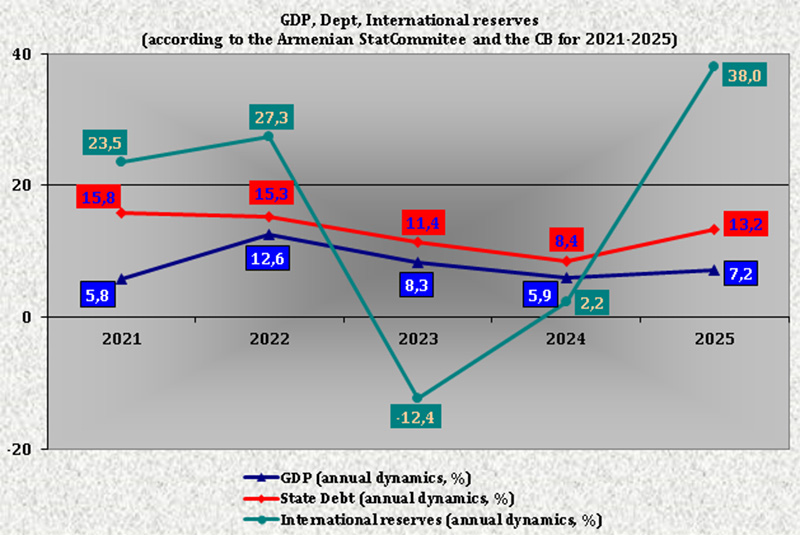
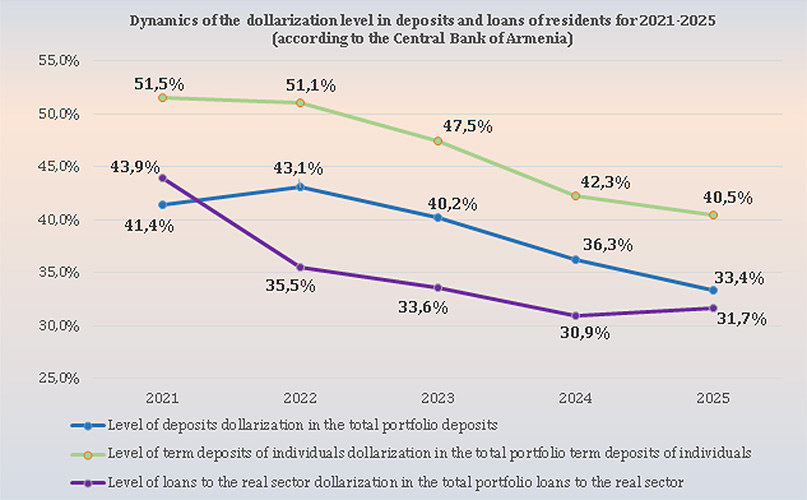
In 2026-2028, government debt is projected to reach 54-55%. This is due to a constant reduction in the budget deficit, which will bring the debt closer to 50% by 2030 (48% of GDP by the end of 2024, 52.6%, as expected, by the end of 2025, 54.6%% - by the end of 2026, 54.(% - 2027 and 55.4% - 2028). The program also aims to have the 48% of the debt raised in national currency in the structure of government debt by the end of 2025 (50.8% by the end of 2024), with similar percentages in 2026, 2027 and 2028. The share of domestic debt is expected to decrease from 51.8% by the end of 2024 to 50% in 2025, and then to 49.7%, 49.3% and 48.1% from 2026 to 2028.
Armenia's government debt payments are also on the rise, with projections reaching AMD 1.202 billion in 2028 (up from AMD 1.108 billion in 2025). Fiscal consolidation will be carried out by optimizing current expenditures and increasing their efficiency. This will involve reducing their role in GDP, while also limiting fiscal stimulus in the early stages of the medium term. By the end of the medium term, fiscal policy will return to a neutral position in terms of its impact on aggregate demand, while having a positive impact on the economy's potential in the long run.
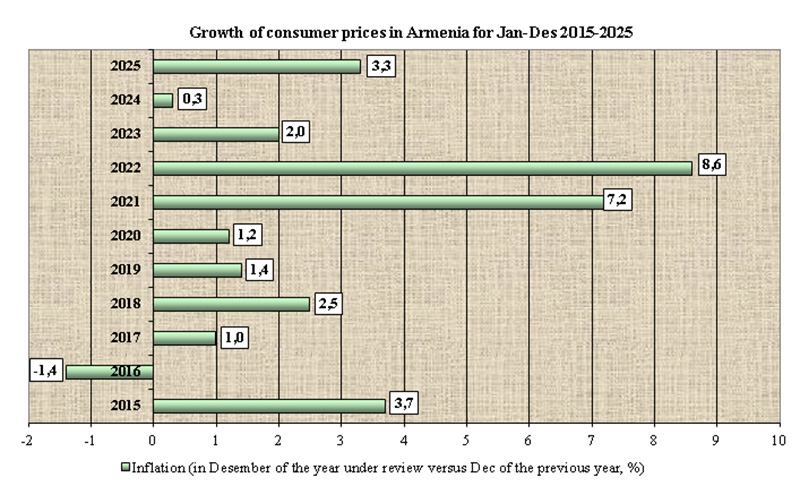
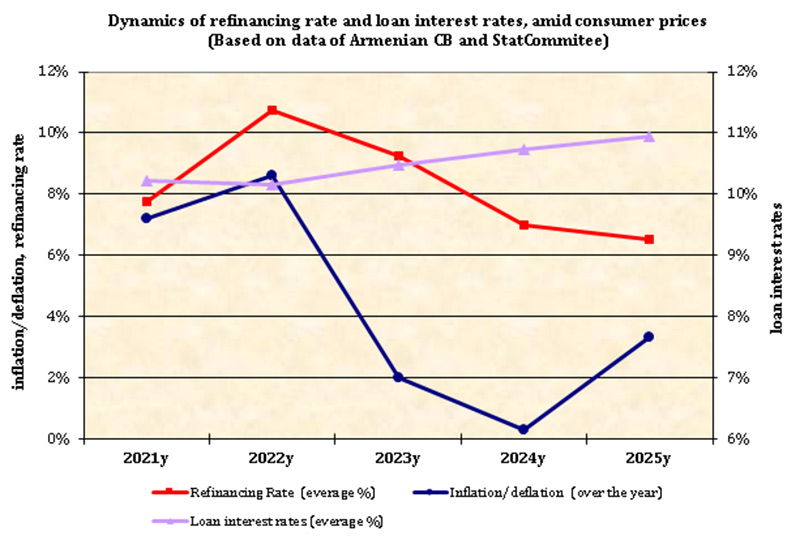
For fiscal policy as a whole, the priority is the most efficient use of available resources and the formation of potential risk management capabilities, which, along with an increase in growth potential, should guarantee fiscal sustainability in the long term. Average inflation in 2025 is expected to be 2.5%, then approach the target of 3% and stabilize around it in the medium term. By constantly monitoring economic development scenarios, the Central Bank will take adequate measures to ensure a 3% inflation rate and price stability in the medium term.
In the medium term, as a result of improving tax administration, combating the shadow economy, and implementing tax policy measures, there is an expectation of a constant improvement in the tax/GDP ratio: 0.7 in 2025, 0.5 in 2026, and 0.2 percentage points in subsequent years, which brings the final tax/GDP ratio in the medium term closer to the effective limit of possibilities within the framework of the current legislation and economic structure, namely 25-26% of GDP. In the medium term for 2026-2028, the goal is to ensure fiscal sustainability by reducing the budget deficit, gradually bringing it to up to 2.8% of GDP from 5.5% of GDP in 2025 (4.5% in 2026, 3.5% in 2027, 2, 2.8% in 2028, 1.8% in 2029 and 1% in 2030). Achieving this will require an annual decrease in the share of budget expenditures in GDP by 1 point .Current expenditures in GDP will also decrease in line with the goal of fiscal consolidation, while capital expenditures will stabilize at a level significantly higher than historical averages. This will help strengthening economic and security infrastructure. The share of capital expenditures in GDP will average 5.9% until 2028, while current expenditures will gradually drop from 24.3% in 2026 to 22.7% in 2028.