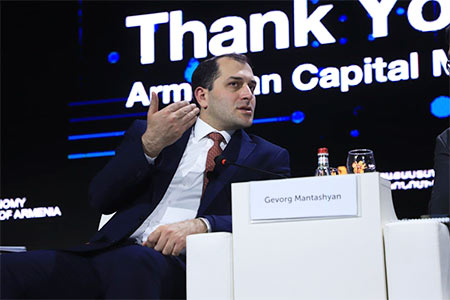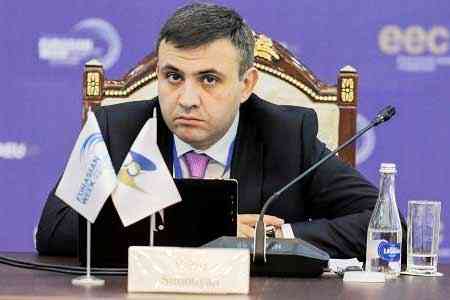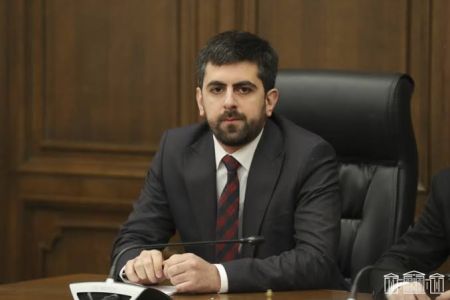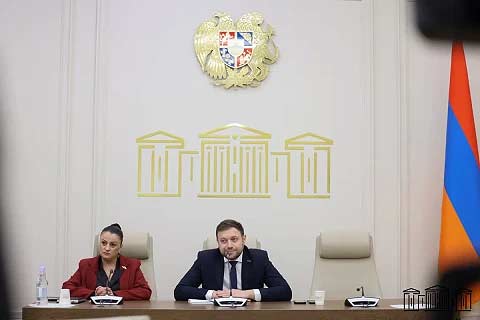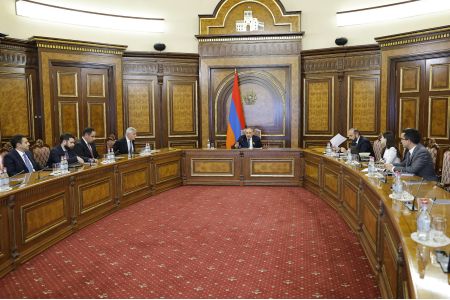
ArmInfo. The International Trade and Investment Forum (ITIF) has kicked off in Yerevan at the initiative of the Investment Council of the European Bank for Reconstruction and Development (EBRD).
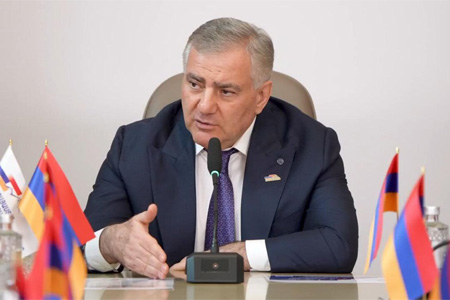
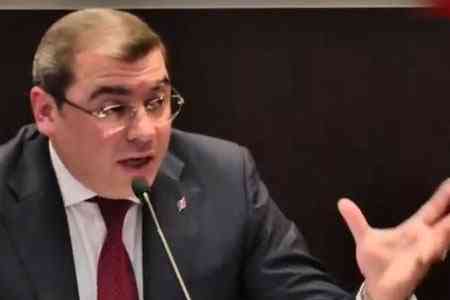
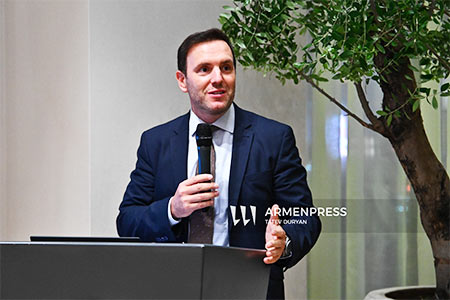
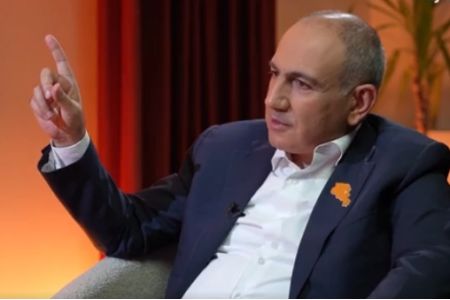
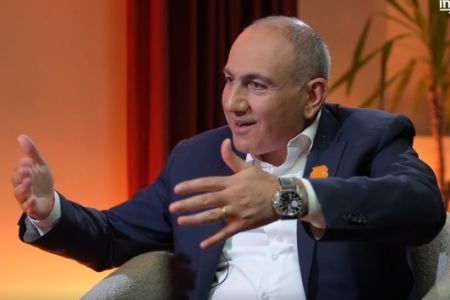
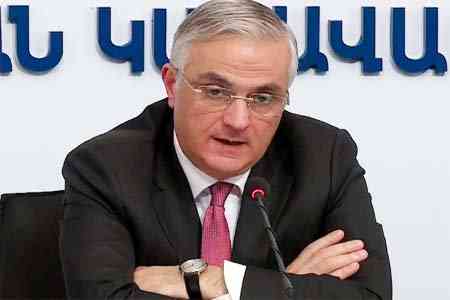
In an interview with journalists, Hovsep Patvakayan, head of the Investment Council, reported that over 600 applications for participation in the Forum were submitted, but unfortunately, capacity was limited to just over 200. "Therefore, we are considering holding a larger event next year, given the interest in Armenia," the head of the Investment Council noted.
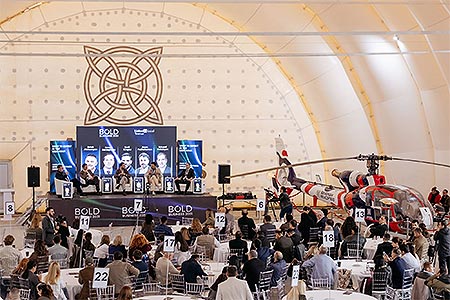
Thus, the event currently brings together a total of 220 delegates from 25 countries, representing various businesses, retail chains, and investors. "That is, people interested in Armenia, investing in the Armenian market, and importing from Armenia." "The geography is quite diverse - from Greece to Japan, from Saudi Arabia to Moldova," Patvakanyan noted.
The three-day forum program, he went on to explain, is divided into several parts: the official section, which includes presentations and panel discussions; B2B meetings; and visits to enterprises to learn about the production cycle. "We selected enterprises that are certified and meet international standards to avoid any difficulties in establishing cooperation," the head of the Investment Council said.
Responding to a question from an ArmInfo correspondent, he explained that the investment interest of the visiting delegations is primarily in the import of food products, cosmetics, engineering, and other products.
"We selected guests based on Armenia's economic priorities - primarily export diversification. Access to new markets is also important for our entrepreneurs. We primarily selected representatives of retail chains that had not previously worked with Armenia. This is their first experience." "And we intend to present them with an investment environment and government assistance programs so that they can consider long- term programs for implementation here," he emphasized.
Patvakanyan also noted that Armenia is recording certain successes in export diversification. "While Russia was previously Armenia's number one export partner, its share has now dropped to 25-30%, while we are seeing significant structural changes in other countries, such as the UAE, Iraq, and China," he added. Furthermore, the head of the Council noted that while Armenia previously exported exclusively mining products to Europe, we now also supply finished goods, including food products, cigarettes, and beverages. Specifically, over the past two years, exports to the European market have grown by 18-20%.
Responding to an ArmInfo correspondent's question regarding the share of re-exports, Patvakanyan noted that, based on the results of last year, their volume in the overall export structure amounted to approximately 20-22%. "If we look at re-exports from the perspective of added value in GDP, their share is small, but in export statistics, re-exports account for a large share. Unfortunately, the Statistical Committee of Armenia does not keep separate records of re-exports, and our expert groups independently, very roughly, calculate their volumes based on categories of goods not produced in our country-electronics, household appliances, telephones, etc.," he said.
According to the Statistical Committee of the Republic of Armenia, the net flow of total foreign investment in the real sector of the Armenian economy decreased by 55.3% year-on-year in the first half of 2025, to a positive $125 million (48 billion drams) from a positive $276.4 million (107.3 billion drams). At the same time, the net flow of foreign direct investment (FDI) went from a negative $56.5 million (21.9 billion drams) to a positive $13.1 million (5 billion drams), increasing by 2.2 times year-on-year. Armenia's foreign trade turnover for January-August 2025 amounted to $12.9 billion, decreasing by 41.1% year-on- year (compared to 79.6% growth a year ago). In particular, a deterioration in dynamics was noted for both exports and imports, with a decline of 48.8-34.9% (from a 2.1-fold and 59.3-fold increase a year ago), with volumes falling to $5 billion and $7.9 billion, respectively. Armenia's negative foreign trade balance for January-August 2025 increased by 22% year-on-year to $2.9 billion.
In total, Armenia's foreign trade with the EAEU fell by 49.9% in January-August 2025 compared to the same period in 2024 (against a two-fold increase a year ago) to $4.7 billion, while with the EU, it grew by 5.6% (from a 19.2-fold decline a year ago) to $1.6 billion. Moreover, among the EAEU countries, a significant decline in volumes was recorded for the Russian Federation, while most EU countries chose to increase The largest volumes are the Netherlands, France, Romania, Austria, Spain, Slovakia, Finland, Italy, Poland, Hungary, and Sweden. This change in annual dynamics reduced the EAEU's share of Armenia's foreign trade from 42.9% to 36.5% (due to the Russian Federation, from 42% to 34.8%), while the EU's share, conversely, increased from 6.8% to 12.2%.