ArmInfo. The hardest thing of all is to find a cat in a dark room, especially if there is no cat. This saying, attributed to Confucius, could very well apply to Armenia's nuclear energy sector.
The country's authorities have officially announced their decision to build a nuclear power plant with small modular reactors (SMRs) in Armenia. To achieve this goal, a closed joint-stock company, "Construction and Operation of a New Nuclear Power Plant," has been established. It will determine the capacity of the new nuclear power plant, its funding sources, and its subsequent operation.
However, the paradox of the situation is that there are no such reactors anywhere in the world: they are all either in the design, construction, or grid connection phases. However, as Armenian Prime Minister Nikol Pashinyan previously noted, a final decision on this issue should be made within a year or a year and a half.
Therefore, based on the current global nuclear technology market situation, it can be concluded that the country's authorities intend to abandon the idea of using older reference units that have been in operation for a long time and have proven their effectiveness.
A SMR plant itself is a good idea, as the rated capacity of such units is up to 300 MW, which is quite acceptable for Armenia. Having two such SMRs will ensure the country's energy security for many years to come.
SMRs utilize nuclear fuel more efficiently and have safety features based on passive systems such as natural circulation, convection, gravity, and self-pressurization. These features reduce the risk of accidents, and are several times cheaper than traditional ones. Additionally, their prefabrication speeds up the construction process as the equipment and components are manufactured on-site. However, the problem lies in the fact that that in practice, all of this is practically nonexistent, especially when it comes to American technology. Washington's initiative to actively cooperate with Yerevan on a new nuclear power plant is largely political in nature. Previously, Maria Longuet, the US government's coordinator for European and Asian assistance, explicitly stated that the US is considering building small modular nuclear reactors in Armenia to reduce dependence on Russia and China.
Meanwhile, in the United States itself, most nuclear power plants were built between 1967 and 1990; the average reactor age is approximately 35.6 years, with some already operating for over 50 years. The last units at the Vogl Nuclear Power Plant were commissioned in 2023 and 2025, more than 30 years later. There are 93 operating nuclear reactors at 54 nuclear power plants in 28 states. This list does not include a single SMR plant. Furthermore, one of the first projects to build a SMR plant in the United States was canceled. NuScael Power Corp. canceled construction of its mini-NPP in Utah due to soaring costs, which made it impossible to secure acceptable contracts with customers. However, design and construction work on SMR plants in the United States continues. Specifically, Bill Gates is investing in nuclear energy through his company, Terra Power, which develops advanced nuclear reactors such as the Natrium reactor. Total private investment will exceed $1.4 billion. In an interview with ArmInfo, UN National Energy Expert Ara Marjanyan noted that the US proposal to Armenia regarding small modular reactors appears unfounded, ephemeral, and purely political. Not a single SMR nuclear power plant will be built in the US in the next five years. "Although it should be noted that this work has intensified since Donald Trump's second term. However, given the lengthy licensing process for nuclear technologies, it's unlikely that the United States will have a similar reactor by 2036.
On the other hand, Russia currently has the necessary technologies. Moreover, Rosatom is offering Armenia a whole range of proposals for nuclear units, ranging from SMRs to proven VVER-type reactors. So, there's no point in looking for a cat in a dark room, especially if there is no cat," the expert emphasized, pointing to Russia's SMR fast-neutron reactor. Marjanyan also noted that France, for example, will resume nuclear projects only in mid-2026.
It's worth noting that only two SMR nuclear power plants are currently operating in the world, and they haven't yet proven their effectiveness on the ground. The most well-known example is China's Shidaowan Nuclear Power Plant, with its grid-connected high-temperature gas-cooled HTR-PM reactors. Other operating SMRs include the world's first floating nuclear power plant, the Akademik Lomonosov, in Pevek, Russia (two reactors, 35 MW each), and the EGP-6 reactor plant. New SMR-based nuclear power plants are also planned for various regions of the Russian Federation, including the Kursk, Kola, and Smolensk nuclear power plants, as well as in the Chelyabinsk region and Krasnoyarsk Krai. These projects include a power complex with a BREST-OD-300 reactor as part of the Proryv project, and nuclear power plants with fast neutron reactors in the Chelyabinsk region and Krasnoyarsk Krai. The Shelf-M reactor project is also under development, with the first prototype expected to be commissioned in 2030. Russia and China are jointly developing the ACP100 multipurpose small modular reactor project, the first of which is planned for construction at the Changjiang Nuclear Power Plant (CNPP).
It should also be noted that there are currently no operating nuclear power plants with small modular reactors in the world, and only a dozen projects are in various stages of development. Some of these have already passed the design stage and are scheduled to begin test operation within a few years.
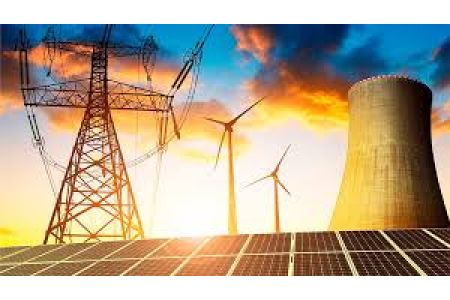
Based on the above, it can be concluded that no small nuclear unit will be built in Armenia by 2036, primarily due to uncertainty. Most likely, the project to construct a new nuclear power unit by 2040 will be abandoned, and the country's authorities will declare their preference for building storage stations for existing and under-construction solar power plants, the combined capacity of which, as Prime Minister Nikol Pashinyan has already stated, is approaching the capacity of two nuclear power plants. And Armenia will no longer be a country with peaceful nuclear energy, with all the ensuing international, political, energy, technological and other consequences.