

ArmInfo. Pronounced excess-demand factors prompted the Central Bank of Armenia to raise the refinancing rate. Chairman of the Central Bank of the Republic of Armenia Martin Galstyan stated this on September 15 during a press conference convened to present the rationale for the decision by the Central Bank Board to raise the key rate from 6.5% to 6.75%, after keeping it unchanged for nine months.
"When people spoke about rising inflation in June-July, they attributed it to supply-side factors. Now, however, we see a situation in which the factor of expanding domestic and external demand has been added, stemming from a new large wave of relocants arriving in Armenia, which has led to the resumption of accelerated growth in prices in the services sector, which are not particularly prone to change. Demand has increased noticeably in recent months. In fact, we are seeing an acceleration in economic growth, external demand, and a new inflow of relocants, which is reflected in the rising prices of services, goods and assets (including real estate - ed.). In other words, excess demand is evident. And if previously inflation exceeded the target under the influence of supply-side factors, now the effect of expanding demand has also been added, which currently increases the likelihood of risks," Galstyan explained, drawing attention to another less pronounced factor - according to a new survey, the number of citizens expecting high inflation has increased. These factors - excess demand and citizens' expectations of high inflation - prompted the Central Bank to raise the refinancing rate after all.
Galstyan also noted that the significant inflow of capital is mainly reflected in reserves and does not have a substantial impact on the market. "At the same time, we see that the FAO index has risen by 6.1% since the beginning of the year, not to mention the price of Brent crude, which has already reached $107 per barrel today. Moreover, if, in addition to the restrictions already imposed on the export of many goods to the Russian Federation, gas prices also rise in Armenia, this could have a dual effect which, apart from raising the inflation rate, could also materialize risks of an economic downturn. We considered such an option, but from our point of view, a different type of scenario is more likely - most likely, an apocalyptic development may occur, to which the response should be tougher and non-standard. Therefore, at this point we are following the standard course, while keeping in mind the existence of these possible problems," he added.
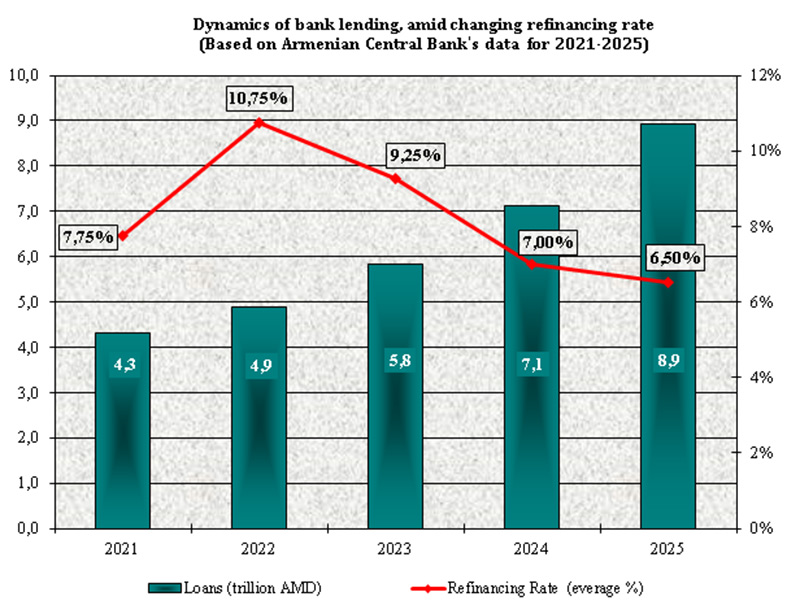
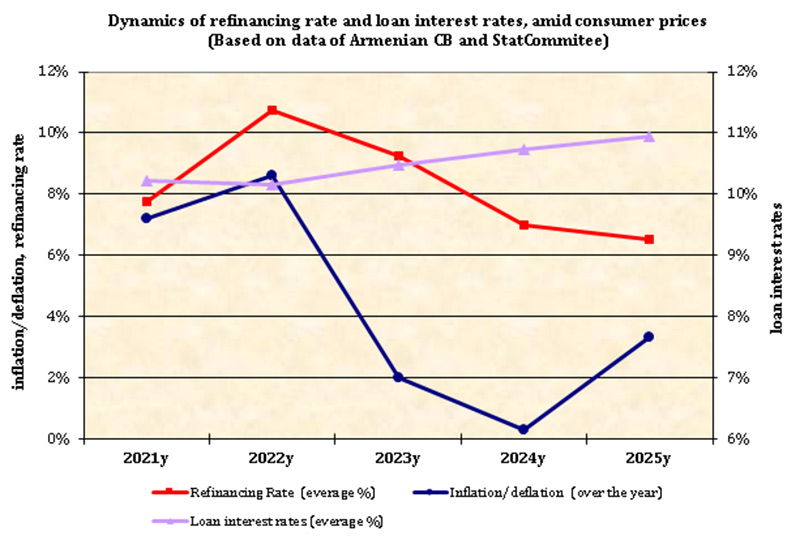
It should be noted that from mid-December 2025 through September 15, 2026, the Central Bank of Armenia kept the refinancing rate at 6.5%. Before that, since mid-2023, the key rate had been reduced by a total of 4.25 percentage points - from a historically high 10.75%.
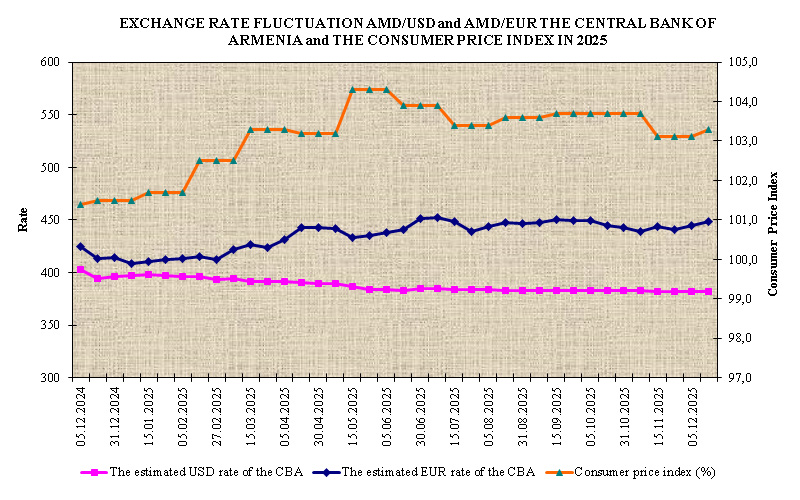
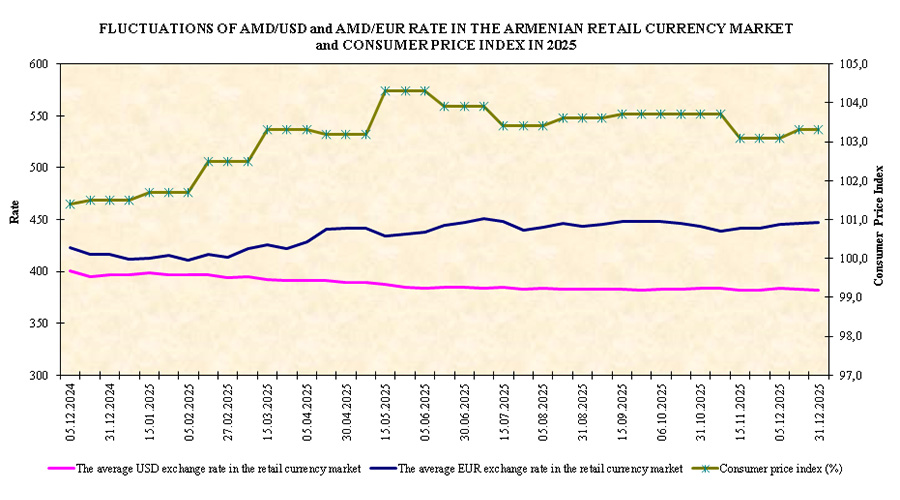
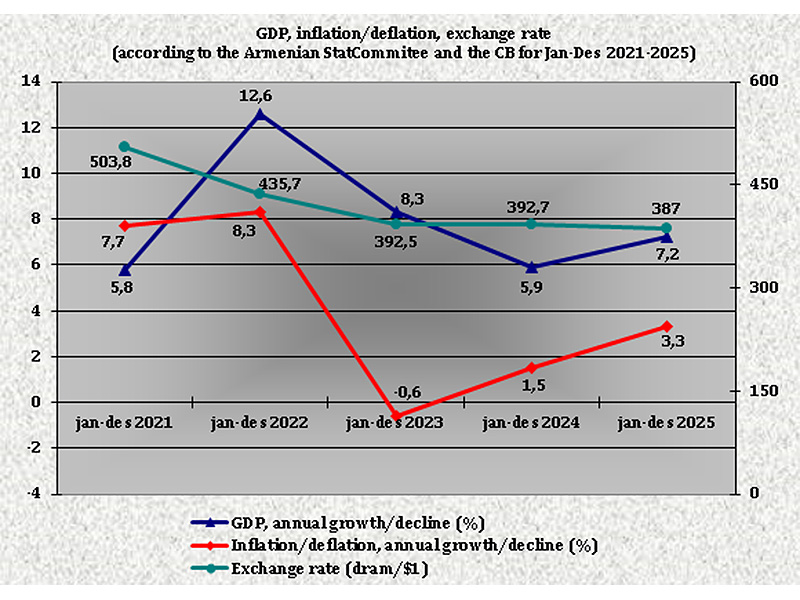
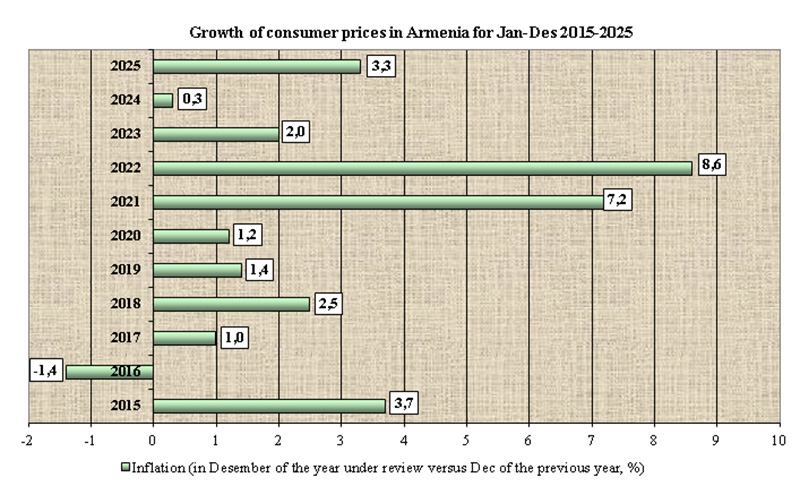
According to statistical data, in August 2026, compared with August 2025, inflation of 4.4% was recorded in Armenia, versus inflation of 3.6% in August 2025 compared with August 2024. The Central Bank's calculated core annual inflation indicator for August stood at 4.8%, versus inflation of 3.7% a year earlier during the same period. Meanwhile, starting in 2025, the inflation target was set at 3%, with an allowable deviation range of +/- 1 percentage point (versus the previous 4%, +/- 1.5 percentage points). In fact, by September 2026, inflation had already exceeded the maximum threshold of the allowable deviation range from the target.