

ArmInfo.The implementation of the Meghri hydroelectric power plant construction project on the Araks river bordering Iran is already in serious doubt. Director at Energy Strategy Center at Scientific Research Institute of Energy of the Republic of Armenia Vahan Sargsyan told in an interview with ArmInfo correspondent.
According to him, although the project is beneficial for both Iran and Armenia, there is no activity in that direction today. Initially, it was planned that the cascade, which was supposed to consist of two HPPs (one on the territory of each of the parties with the use of a diversion tunnel) would be built by the Iranian side, and for this reason, the entire cascade was to belong to the Iranian side until full repayment by Armenia of all costs associated with construction by supplying electricity to a neighboring state. 15 years later, after the commissioning of the facility, the HPP on the Armenian side was to become the property of the RA. "Now there is no activity in this direction," the specialist noted, adding that the construction projects of the Lori-Berd and Shnogh hydroelectric power stations could suffer a similar fate.
Sargsyan noted that there are disagreements in government circles on the issue of the Shnogh and Lori-Berd HPPs, some consider the project important and insist on its inclusion in the Cabinet's program, while others, on the contrary, point to the importance of building small hydroelectric power plants instead of these generating facilities. "By and large, both of these projects are not entirely profitable from an economic point of view, but they could become important components of the country's energy independence from the energy security point of view, since local raw materials would be used, in this case, water," the specialist noted, adding that, in comparison with other hydroelectric power plants, the construction of the Shnogh and Lori-Berd HPPs will cost much more.
Sargsyan pointed out the importance of building pumped storage stations. He recalled that back in Soviet times, the ArmHydroProject Institute developed a project for the construction of a similar station, which would have to accumulate electricity from the third and fourth power units of the Armenian NPP, the construction of which was envisaged, and it was planned to increase the units of the Hrazdan TPP from 200 MW to 300 MW. Then the problem of electricity accumulation began to gain relevance. ArmHydroProject Institute carried out serious studies, according to the results of which the territories for the construction of the pumped storage stations were selected, which took into account the accumulation of water in reservoirs on the upper and lower platforms.
However, these projects were not destined to come true. Subsequently, in 1998, the Institute of Energy of the Republic of Armenia and the ArmHydroProject Institute as well as a private organization conducted joint studies, as a result of which five territories were selected, where the construction of the pumped storage station was envisaged. True, at that time the environmental component was not considered, since it was envisaged to leave this issue for a comprehensive decision. Today, an option is being considered, according to which, next to the existing hydroelectric power plants, it is planned to build pumping stations, with the help of which water from low reservoirs will be directed to upper reservoirs. This project is still under discussion, and there are all grounds and justifications for the construction of these facilities, but it is necessary to carry out serious scientific research works for the justification of its construction..
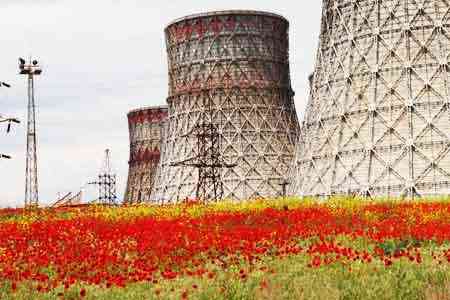
As for the Iran-Armenia-Georgia-Russia electric power corridor, as the specialist emphasized, the implementation of this project has practically been stopped. There is no progress on this program <The problem is under the constant control of the Armenian government, and it is necessary to finally decide whether the work will be completed or not. Today, one of the most discussed issues in the country is whether Armenia needs a new nuclear power unit or not? It is my deep conviction that it is necessary; but it is another matter when it comes to the capacity of the new unit. Initially, when the project was developed for a capacity of 1,000 MW, it was understood that a significant part of the electricity produced from the new unit was to be exported via a new 400-kilovolt power transmission line>, the specialist said. He added that today the capacity of the current unit of the Armenian NPP is 400 MW, and with the construction of a new unit, the issue of exporting 600 MW of electricity would have to be resolved. Previously, it was meant that the new transmission line could serve not only Armenia, but also Iran and Russia, which could carry out mutual power flows. Sargsyan added that according to his information, the contractor of the project, the Iranian Sunir company, had problems with the banking system of Iran, which became a problem in the implementation of the project, which is directly related to the sanctions imposed by the United States and other Western countries against the Islamic Republic. It should be reminded that the Iranian Sunir company is the contractor for the construction of the 400- kilovolt power transmission line Iran-Armenia. The total cost of the project is $107.9 million, of which 77% should be provided by the Export Development Bank of Iran, and 23% by Sunir. It was initially planned that the Armenia-Georgia power transmission line was to be built in parallel, which would make it possible to establish the North-South energy corridor, however, changes in the route scheme, developments in the region constantly postponed the implementation of this program worth 326.9 million euros, 10% of which were to be part of Georgia's contribution.