


ArmInfo.The profits of Armenian banks, which sharply increased over the past year by leaps and bounds in foreign exchange transactions, are beginning to slow down significantly in growth rates.
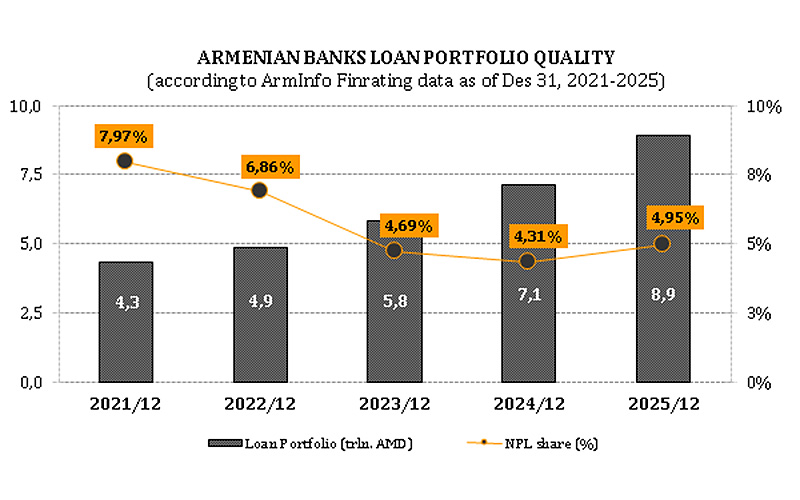
Attempts to return it to stable growth through lending did not achieve the desired result due to weak impulse from economic entities. In addition, retail lending, which continues to grow at an accelerated pace, threatens even the current weak profit growth, since it is this portfolio that contains a dominant share of high-risk toxic loans, the write-off of which from the balance sheet negatively affects the financial result.
According to the Financial Rating of Banks of Armenia as of September 30, 2023, prepared by the ArmInfo Information Company, in the banking system of Armenia, net profit slowed down significantly in y-o-y growth to 11% (after last year's 3-fold increase), amounting to 215 billion drams ($546.4 million) for the 9 months of 2023. But it is noteworthy that interest income, rather than non-interest income, began to support growth again, as it was during the previous year, when profits were generated through currency transactions and card transactions actively carried out by immigrants. This is evidenced by the decline in the share of profit from foreign exchange transactions to 41% from 65% last year, which was the result of a 30% drop in absolute value (profit from foreign exchange transactions) after a 5.3-fold increase in the previous year.
This led to a 39% reduction in non-interest income and allowed interest income growth to accelerate to 25%, while the nearly 4-fold increase in non-interest income a year ago was accompanied by a slowdown in interest income growth to 10%.
However, it should be clarified that lending is not yet the driving force of interest income growth at this stage. The growth is dictated to a greater extent by with nostro accounts and interbank loans/deposits, income from which increased 3-fold (from 72.3% of the previous year), and to a relatively lesser extent by transactions with securities and lending.
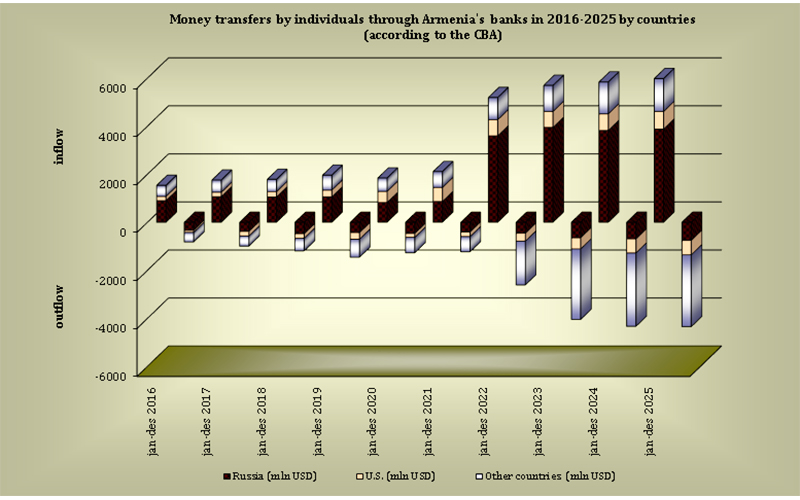
In particular, the growth of interest income from securities transactions accelerated from 28% to 34%, and from lending - from 4.4% to 15%. In terms of commission income, the upward trend in card transactions continues to gain momentum - from 35% to 78%, in parallel with which the growth in income from money transfers has stalled greatly - from 75% to 7%, the volumes of which are declining.
Despite the modest pace, lending retains its dominance in income - 74% in interest and 45% in total. The second place is held by transactions with securities - 22% in interest and 14% in total, and the share of nostro accounts and interbank loans/deposits is insignificant - 5% in interest and 3% in total. In commission income, the share of card transactions is 23%, and money transfers - 12%.
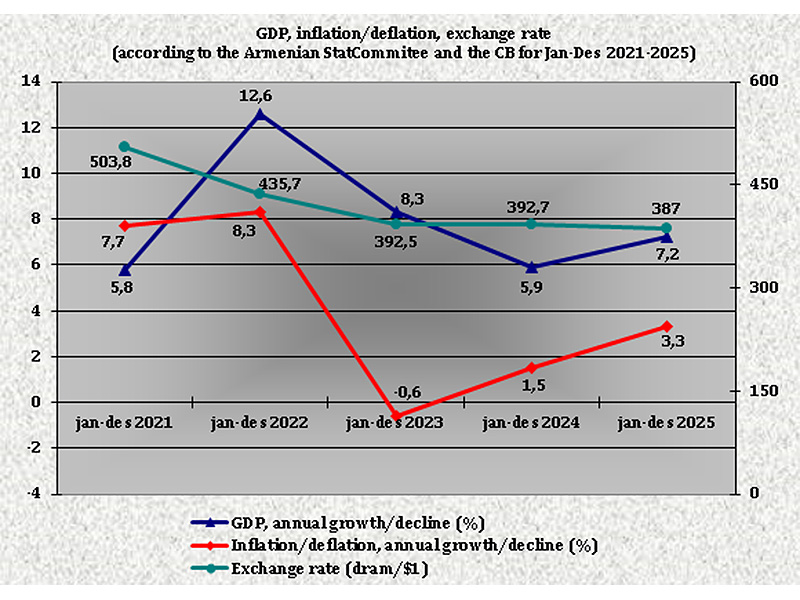
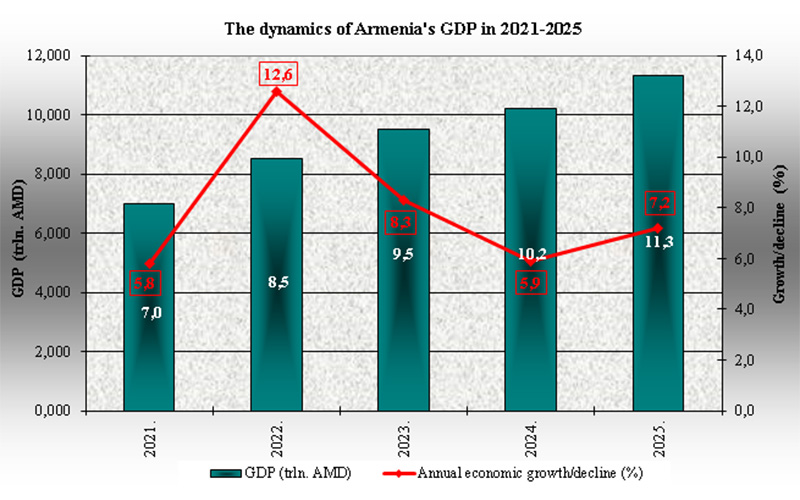
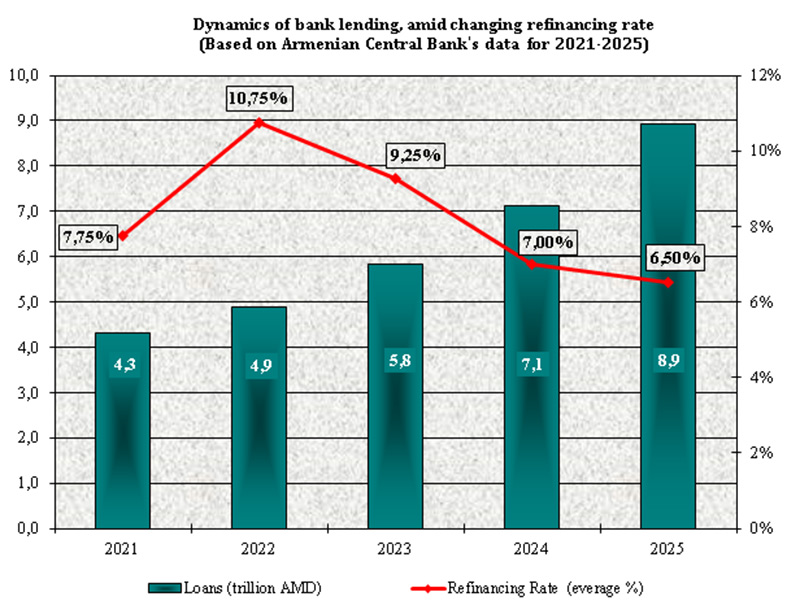
So, the volume of lending accelerated in y-o-y growth from 12% to 15.4%, reaching 5.3 trillion drams ($13.4 billion) by October 1, 2023, which in relation to GDP is 81.5% against last year's 79.3%. At the same time, y-o-y GDP growth for 9 months of 2023 slowed from 21% to 12%, almost returning to the rate of two years ago (11%). The leader in terms of volume in GDP is the trade sector, the service sector ranks 2nd, the the industrial sector ranks 3rd, the agricultural sector ranks 4th and the construction sector ranks 5th. Consumer loans continue to dominate the banks' loan portfolio with more than 40% and mortgage loans with more than 19% and the largest share of the economic sectors is the trade sector with 13%, followed by the industrial sector with 10% and the construction sector with 9% , agriculture sector and catering/service sector - 5% each.
The share of loans to SMEs over the past two years has more or less stabilized, fluctuating from quarter to quarter within the range of 22-23%, but within the GDP, whether it will be possible to reach the planned 55% by 2026 is hard to believe, especially since the situation with SMEs in Armenia has remained practically unchanged over the past five years, which confirms the slight increase in the share in GDP from 25% to 28%.
In terms of lending to economic sectors, we can already affirmatively mention the top two. The industrial sector: Ameriabank (24% on the market) and Ardshinbank (14.4% on the market), in the same order they are leaders in financing the construction sectors (20% and 16% on the market) , transport and communications (41.4% and 12.6% of the market). Trade sector: Ameriabank and Armbusinessbank (19% and 18% of the market). As for agriculture, the undisputed leader in lending to this sector, Acba Bank, having reduced its volume by 31% per annum, reduced its market coverage from 54% to 35% of the market, and Ameriabank, which followed, doubled its volume and increased its market coverage from 17% to 31%, thereby coming in second place. In terms of net profit, the first two places continue to be occupied by Ardshinbank and Ameriabank, changing the lead between each other from quarter to quarter, and Acba Bank has secured the 3rd place. And these same three banks are also in the TOP-3 in terms of loan income.
In Armenia, since November 2022, the number of banks has increased from 17 to 18. The former Fast Credit Capital Universal Credit Organization CJSC received bank status, renaming itself Fast Bank. A year later, in November 2023, Armbusinessbank rebranded, renaming itself AMIO Bank. Among the 18 banks operating in Armenia there are subsidiaries of foreign banks: (UK), VTB (RF), Mellat (Iran), Byblos Bank (Lebanon). International institutional investors represented by the European Bank for Reconstruction and Development (EBRD) and the Asian Development Bank (ADB) are present in the capital of only one bank- Ameriabank.